Opening Hours
Daily: 10 A.M.–5 P.M.
Closed on Tuesdays
1151 Oxford Road
San Marino, CA 91108
Manuscripts
Image not available
Daily: 10 A.M.–5 P.M.
Closed on Tuesdays
1151 Oxford Road
San Marino, CA 91108

Visual Materials
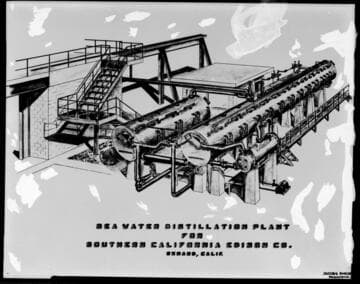
Drawing of a Sea Water Distillation Plant for SCE in Oxnard, CA.
photCL SCE 06 - 71379
Visual Materials
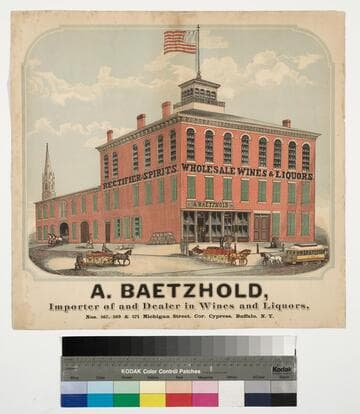
Image of an eye-level view of the storefront of the three-story brick building of the distillery and office of August Baetzhold in Buffalo, New York, showing horse-drawn carts moving barrels of spirits, a horse-drawn omnibus full of passengers, and pedestrians on the street outside; "A. Baetzhold" and "Rectifier of Spirits. Wholesale Wines & Liquors." painted on the building; a church steeple is visible in the background.
priJLC_BEV_001024
Visual Materials
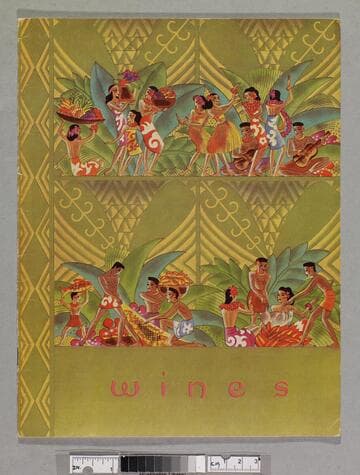
"5930 (20M 4770-1256) Printed in U. S. A."--p. [17], lower right corner. Cover title: Wines. Title derived from p. [2]. Beverage list for sea and port use on board the SS Lurline and SS Matsonia. Focus of item: Lurline ; Matsonia.
ephJHK 00790
Visual Materials
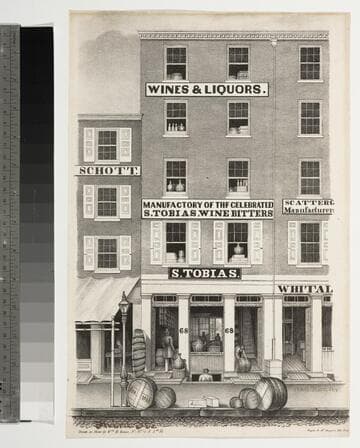
Image of the four-story facade of the wine and liquor store of Solomon Tobias at 68 North Third Street in Philadelphia, Pennsylvania, showing barrels on the sidewalk out front advertising "S. Tobias No. 68 Importer & Dealer in Wines, Liquors, Cordials, and Syrups"; with portions of the storefront signs for the neighboring businesses presumably of dry goods merchant Charles Schott; and the drugstore of Scattergood & Whitall.
priJLC_BEV_000678
Image not available
Visual Materials
The Jay T. Last collection of beverage prints and ephemera contains approximately 2,650 printed items advertising beverage products and related businesses in the United States from the 1840s to the 1940s, with the bulk of the items spanning from 1850 to 1915. The collection consists largely of lithographed ephemeral items produced for American businesses affiliated with the manufacture, distribution, and sale of beverages such as coffee, tea, juice, milk, carbonated beverages, and alcoholic drinks including beer, wine, whiskey, and other liquors. The collection includes approximately 40 large-size items comprised mainly of lithographed advertising prints and product labels for tea, coffee, and spirits. Small-size items number approximately 2,600 and contain a variety of promotional materials including trade cards, calendars, die-cut scraps, booklets, and printed billheads and letterheads with manuscript text. The collection deals with beverage production, merchandising, advertising, and consumption -- including depictions of families and other groups drinking together -- and the images provide a resource for studying the history of American beer, liquor, coffee, tea, and carbonated beverage industries along with the evolution of their advertising in the 19th and early 20th centuries. Materials in the collection produced for manufacturers and distributors of alcoholic beverages also provide a perspective on their advertising strategies in the face of a growing temperance movement in the United States leading up to Prohibition. As graphic materials, the prints offer evidence of developing techniques and trends in printmaking, and of the artists, engravers, lithographers, printers, and publishers involved in the creative process.
priJLC_BEV
Image not available
Visual Materials
The Jay T. Last collection of beverage prints and ephemera contains approximately 2,650 printed items advertising beverage products and related businesses in the United States from the 1840s to the 1940s, with the bulk of the items spanning from 1850 to 1915. The collection consists largely of lithographed ephemeral items produced for American businesses affiliated with the manufacture, distribution, and sale of beverages such as coffee, tea, juice, milk, carbonated beverages, and alcoholic drinks including beer, wine, whiskey, and other liquors. The collection includes approximately 40 large-size items comprised mainly of lithographed advertising prints and product labels for tea, coffee, and spirits. Small-size items number approximately 2,600 and contain a variety of promotional materials including trade cards, calendars, die-cut scraps, booklets, and printed billheads and letterheads with manuscript text. The collection deals with beverage production, merchandising, advertising, and consumption -- including depictions of families and other groups drinking together -- and the images provide a resource for studying the history of American beer, liquor, coffee, tea, and carbonated beverage industries along with the evolution of their advertising in the 19th and early 20th centuries. Materials in the collection produced for manufacturers and distributors of alcoholic beverages also provide a perspective on their advertising strategies in the face of a growing temperance movement in the United States leading up to Prohibition. As graphic materials, the prints offer evidence of developing techniques and trends in printmaking, and of the artists, engravers, lithographers, printers, and publishers involved in the creative process.
priJLC_BEV