Decorative arts
Shelf Clock

1 of 25
This type of clock—popularly known as a “pillar and scroll clock” because of its dual columns and its dramatically curved pediment topped by brass, urn-shaped finials—was patented by the Connecticut-based clockmaker Eli Terry in 1816. Prized for their accuracy and affordability, Terry’s clocks came with a warranty that stated: “The public may be assured that this kind of clock will run as long without repairs, and be as durable and accurate for keeping time, as any kind of clock whatever.” Less expensive than tall case clocks, shelf clocks were very popular in America in the first half of the 19th century. In this example, an image of George Washington’s home, Mount Vernon, is reverse-painted on the lower panel of the glass door.
You might also be interested in
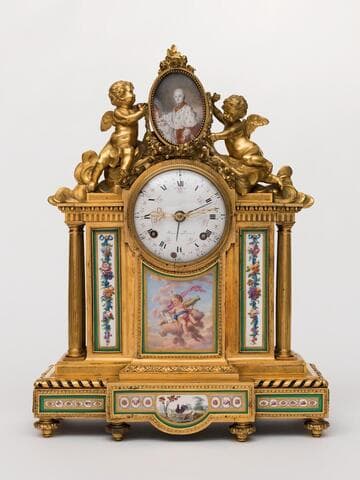
Mantel Clock
Decorative arts
Monginot, Sèvres Porcelain Manufactory, Renacle Nicolas Sotiau, Unknown
27.110