
Opening Hours
Daily: 10 A.M.–5 P.M.
Closed on Tuesdays
1151 Oxford Road
San Marino, CA 91108
Posted on Fri., Oct. 10, 2014 by
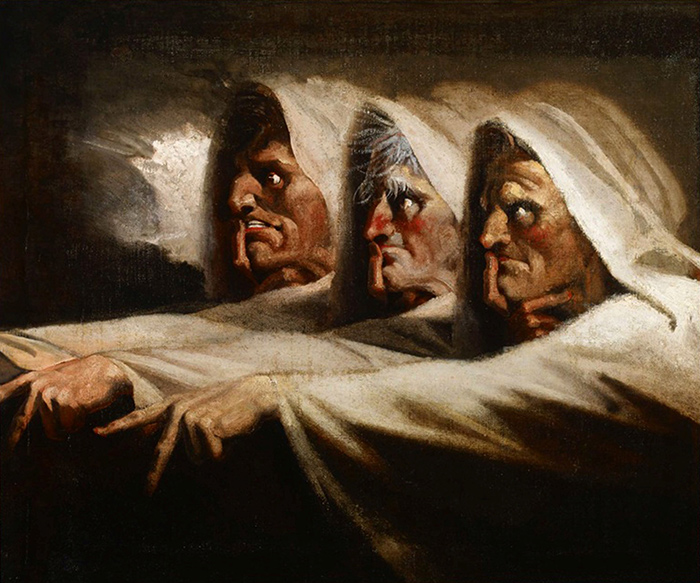
The Huntington’s recently acquired The Three Witches or The Weird Sisters, painted by Henry Fuseli (1741-1825) in about 1785, goes on view tomorrow in the Huntington Art Gallery. It’s one of three full-size color versions that the artist made. The others are at the Kunsthaus Zürich and the Royal Shakespeare Company in Stratford-upon-Avon, England.
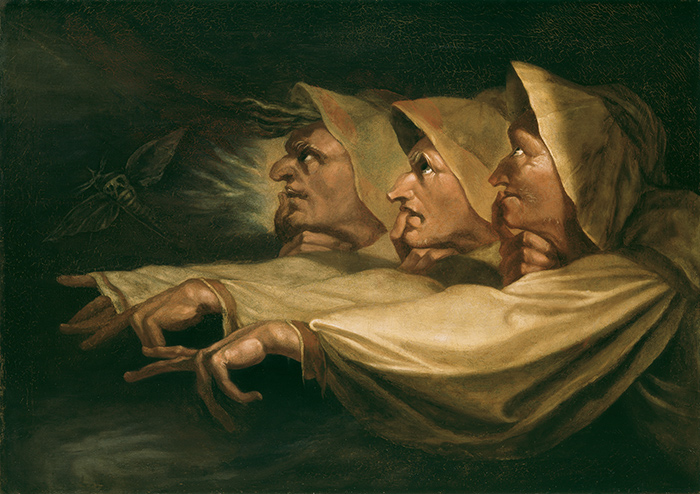
All three paintings depict the trio of witches from William Shakespeare's Macbeth who foretell his fate. Looking for a wicked good time? Compare The Huntington's version of Fuseli's Three Witches (above) with the two other versions below. Scholars believe The Huntington’s is a study for the two that followed. Which witch is your favorite?
The Kunsthaus Zürich’s Witches (1783):
And the Royal Shakespeare Company’s Witches (ca. 1783):
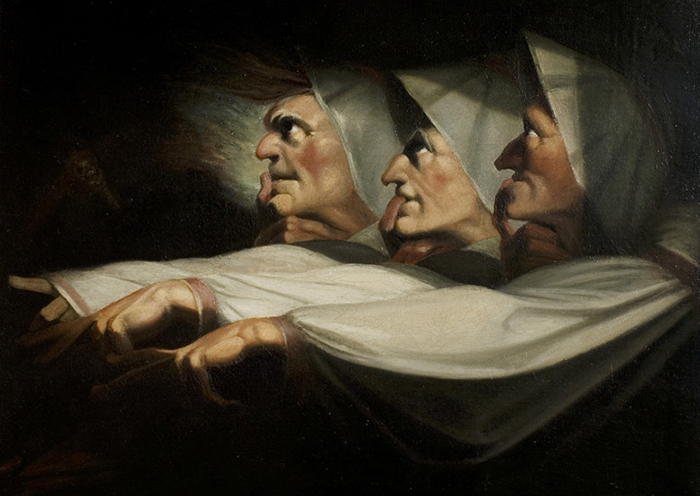
Why do you think Fuseli made the changes he did? He re-cast and re-costumed the characters for one thing. But there’s more.
Look closely at the upper left corner of the Kunsthaus Zürich painting. What is that winged-skull-demon thing haunting the upper left?! (It’s also in the Royal Shakespeare Company version, but just harder to see.) Hint: It’s on the movie poster for the 1991 thriller “Silence of the Lambs.”
Well, it’s a Death's-head Hawkmoth, a real insect with markings uncannily similar to a human skull. As an element of the painting, it serves as a portentous symbol of the fate awaiting Macbeth.
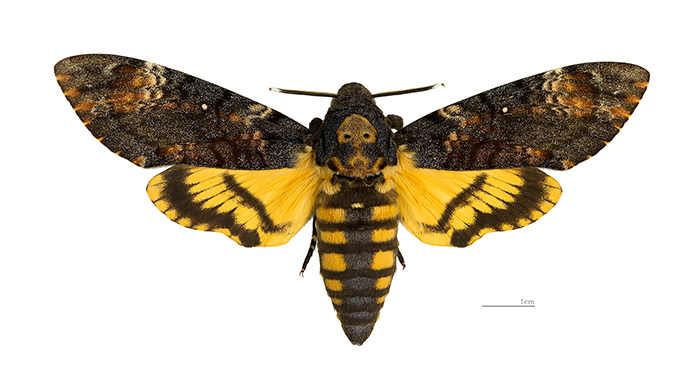
Thankfully, we don’t have any Death's-head Hawkmoths in North America. Happy Halloween!
Related content on Verso:
A Magic Brew? (Oct. 31, 2014)
More Than Meets the Eye (Dec. 16, 2014)
Thea M. Page is director of marketing communications at The Huntington.

The Huntington’s blog takes you behind the scenes for a scholarly view of the collections.