Opening Hours
Daily: 10 A.M.–5 P.M.
Closed on Tuesdays
1151 Oxford Road
San Marino, CA 91108
Posted on Thu., March 17, 2016 by
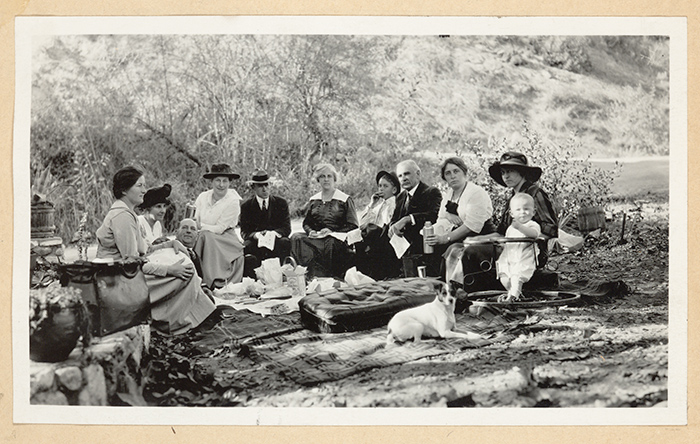
Ralph Arnold (1875–1961) was an eminent petroleum engineer, geologist, local Pasadena resident—and an avid photographer. Photography was an essential part of his fieldwork, but he also used the medium to document his family life. His personal collection of photographic albums of 20th-century oil exploration in the Americas, as well as an extensive collection of personal and professional papers, came to The Huntington in 1958.
I’m a photographic historian interested in corporate civil engineering and oil exploration. Looking at Arnold’s albums, I was surprised to find so many images of his personal life, including portraits of his wife Winninette and two daughters, interspersed with photos of oil exploration and geological surveys.
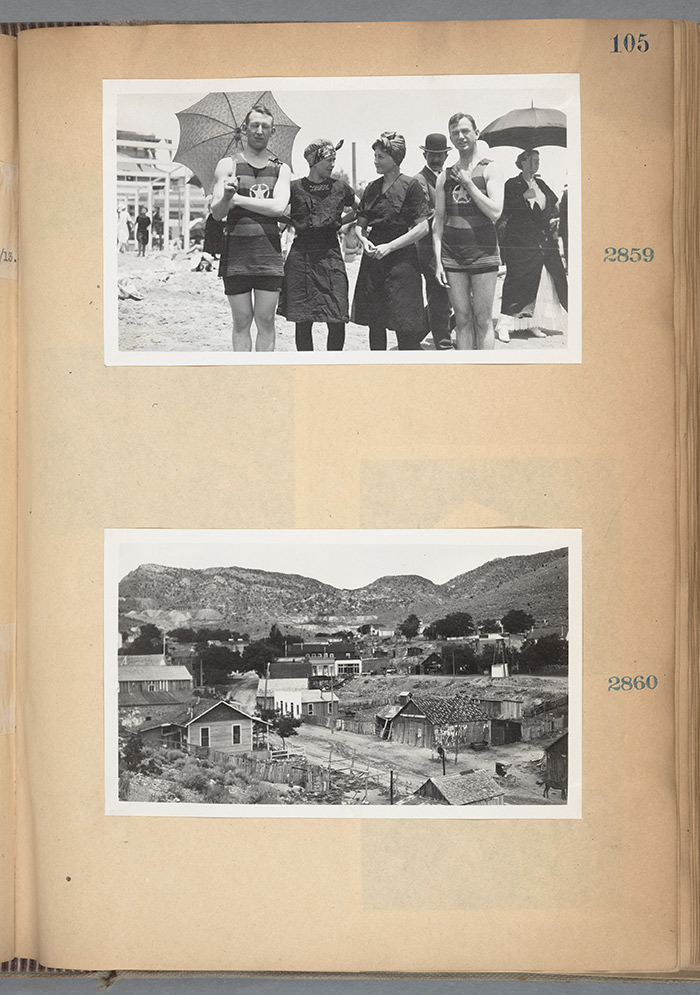
Arnold was interested in science from a young age, completed a technical course at Throop Polytechnic Institute (today Caltech) in 1896, and graduated from Stanford University with an undergraduate and doctoral degree in geology and mining in 1902. His professional career began in 1903 as a field assistant for the United States Geological Survey, where he carried out extensive field work studying the topography and commercial oil potential of central and southern California—including Los Angeles, La Brea, Coalinga, and San Luis Obispo. Nine years later, Arnold left the U.S. Geological Survey and began his career as an independent petroleum engineering consultant, working for global corporations to explore oil opportunities in South and North America. It was during his time as a consultant that Arnold took many of the photographs of his family and compiled them in albums.
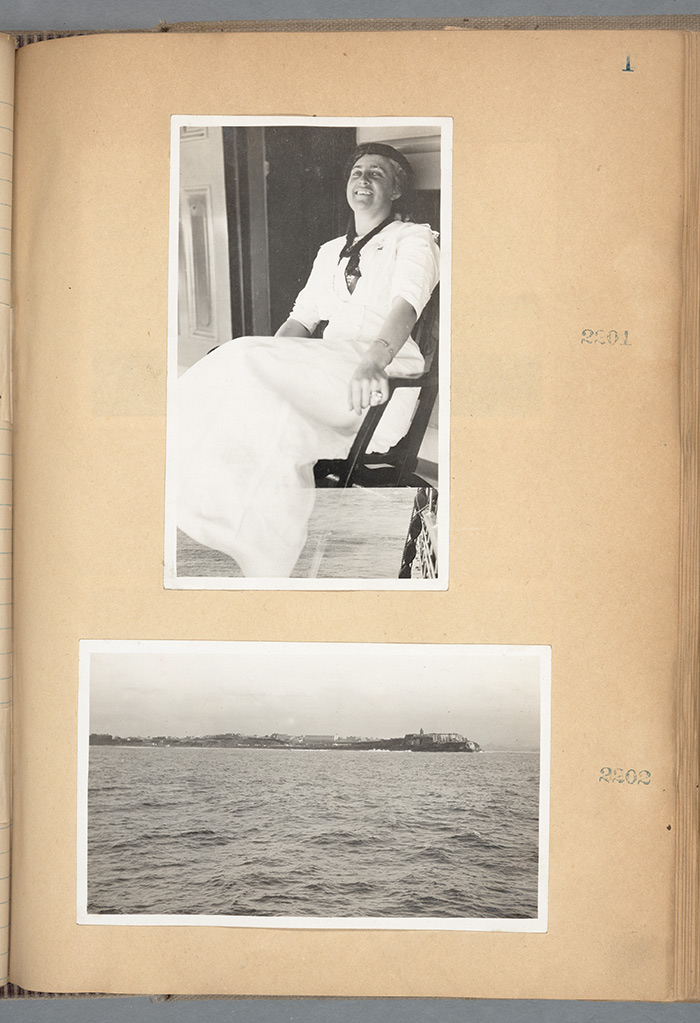
The Ralph Arnold photographic albums are a fascinating visual and material resource for anyone interested in studying the history of oil in California, the American West, and South America—particularly in Venezuela, where Arnold played a fundamental role in the creation of that nation’s oil industry. Arnold’s photos of his wife, daughter, and extended family, taken mainly in Pasadena, add unexpected balance to a technology-oriented photo archive. Arnold made a point of including photographs of vacations and family outings side-by-side with shots from his professional career. Most of the personal photos were taken by Arnold, his wife, Winninette, and his father-in-law, Frank Stokes.
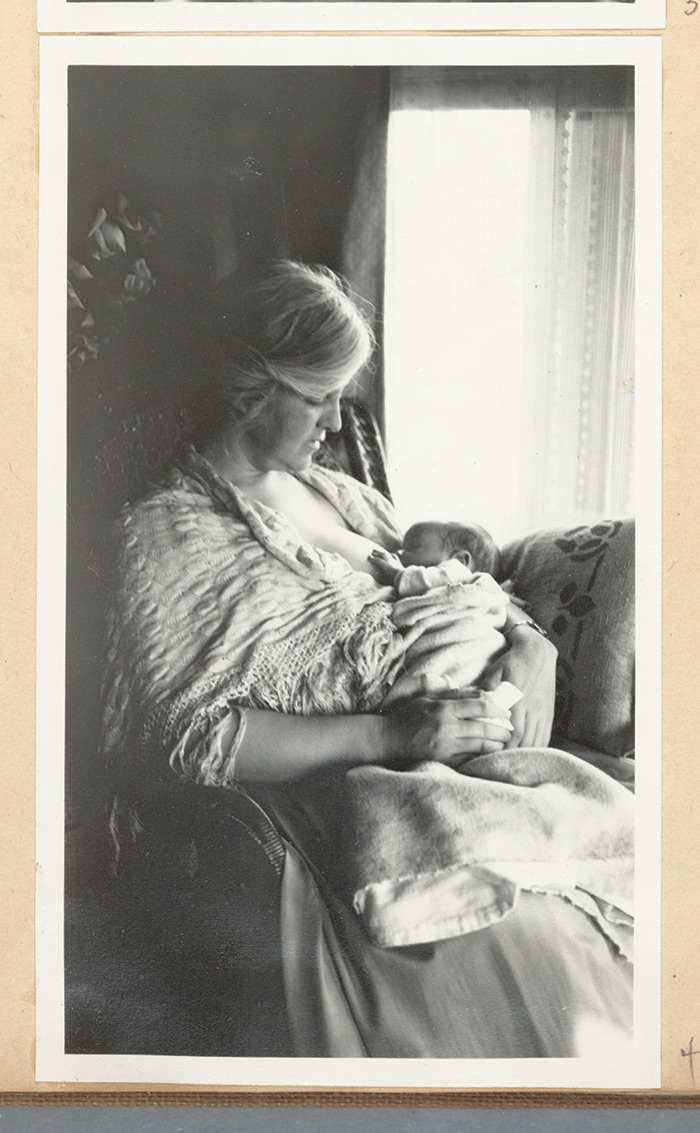
One of the most poignant photos is in an album dedicated to oil exploration in Canada and the western United States. Placed halfway through the 227-page album, in between photographs of oil and topography, appear nine photographs of Arnold’s baby girl, Winninette Jr., in her first few weeks of life. In one image, Arnold’s wife is breastfeeding the infant. Photographed against a window, Winninette is seen sitting on a rocking chair, wearing a shawl over her shoulders. She is focused on her child, seemingly oblivious to the presence of the camera.
Including an image of such an intimate family moment in a photo album about oil and topography is a vivid example of how Arnold blurred the lines between his professional and private life. His extensive use of photography in his professional day-to-day practice offers fascinating visual insight into American petroleum engineering in the 20th century, balanced by personal photographs of his home life, interests, and hobbies.
Noeme Santana is a doctoral candidate at Royal Holloway, University of London, and the Science Museum, London, studying the use of photography as a business practice in the late 19th century. She was a visiting fellow at The Huntington in 2015, with support from the Arts and Humanities Research Council of the United Kingdom.

The Huntington’s blog takes you behind the scenes for a scholarly view of the collections.