Opening Hours
Daily: 10 A.M.–5 P.M.
Closed on Tuesdays
1151 Oxford Road
San Marino, CA 91108
Posted on Wed., Sept. 6, 2017 by
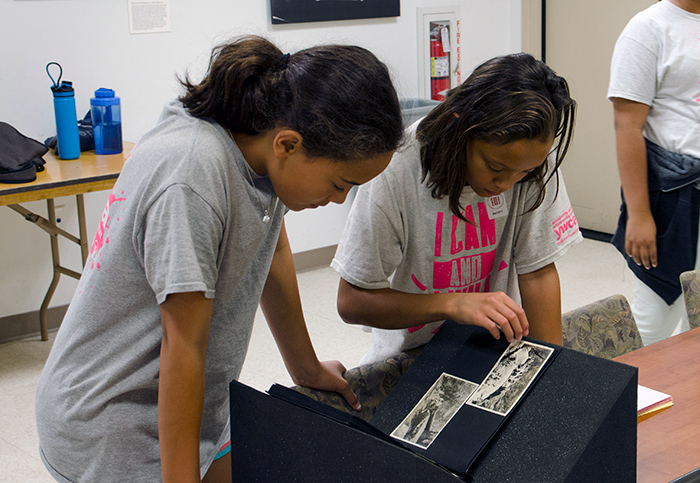
It’s one thing to read about history in a school textbook. It’s quite another thing to engage with it first-hand: to make personal connections with history and, by doing so, to gain perspectives on the past.
That’s exactly what a group of middle school girls had the opportunity to do this summer as part of an ongoing community partnership between The Huntington and the YWCA Pasadena-Foothill Valley. Nearly 100 participants in the YWCA’s Girls’ Empowerment Camp—young women between the ages of 10 and 14—got a chance to go behind the scenes in the Library for an “up-close and personal” experience with materials from the collections. They also got to meet the curators and conservators who work with those rare items.
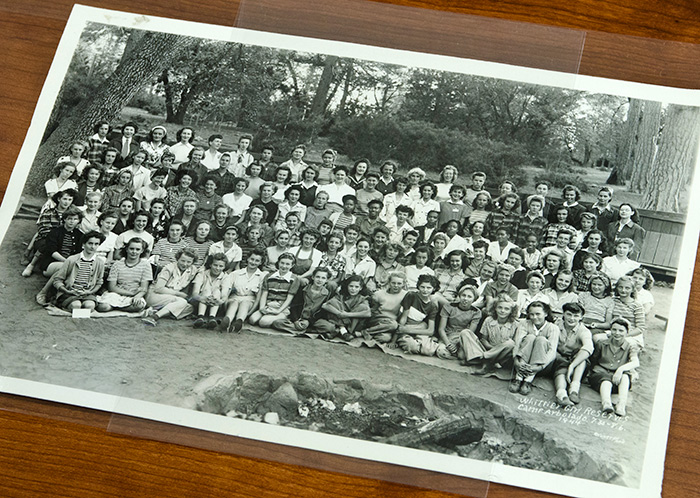
The relevance of many of the materials the young audience engaged with made the experience unique. The program placed a special focus on the history of the YWCA and on growing up in Pasadena.
The theme of the four-week program was “Empowerment and Inspiration, Past and Present.” In the first session, the campers learned about one of the most inspirational daughters of the local community, the late African American author Octavia Butler. Raised by a single working mother in a modest Pasadena home, Butler was shy and bookish as a girl; but she had a natural gift for writing that she honed into an award-winning craft through determination and perseverance.
“Why do I write?” she once asked. “Because I can’t expect anyone else to tell my stories.” Curator Natalie Russell led the girls through an exhibition featuring 100 items that revealed the writer’s early years and influences, aptly titled “Octavia E. Butler: Telling My Stories.” Russell also talked about her own job as a curator—working with rare materials, assisting researchers, and organizing exhibitions. Using Butler’s motivational writings as examples, the campers were then prompted to write down their own reflections on self-empowerment and personal storytelling.
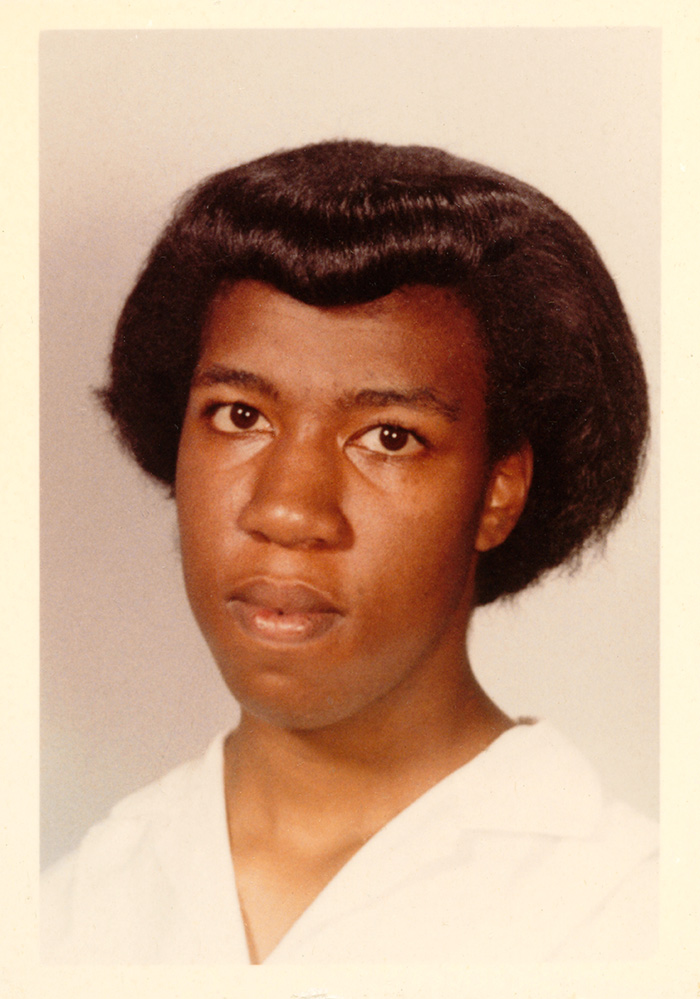
“It was great to see these girls getting excited about Octavia Butler, who grew up in their neighborhood, and by the behind-the-scenes look at what we do here at The Huntington,” says Kate Zankowicz, community engagement coordinator in the Education office. “I loved being able to facilitate conversations with them about their personal experiences and their perspectives about women’s lives in the past.”
Another session focused on the role of graphic arts, both as a tool for empowerment and as a historical record of the changing roles of women over time. Krystle Satrum, assistant curator of the Jay T. Last Collection of Graphic Arts and Social History, shared a group of World War I–era posters, including several that promoted the YWCA. A poster produced for the United War Work Campaign, dated circa 1918, depicted a woman dressed in the factory coveralls and cap of a munitions worker. The caption read, “For Every Fighter, a Woman Worker. Care for Her through the YWCA.”
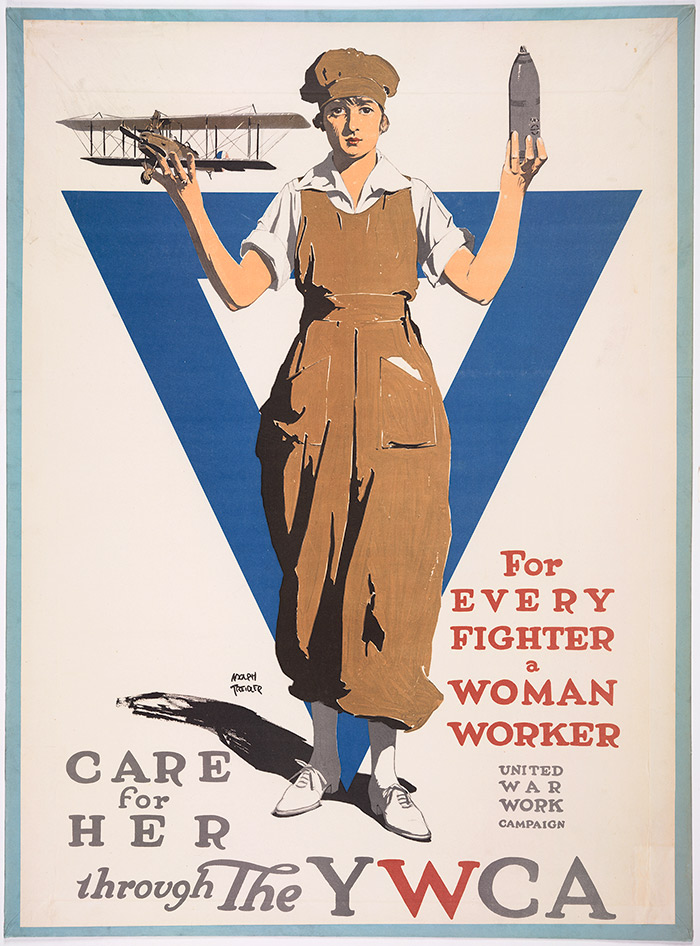
“Access to an object can provide a profound experience. Looking at YWCA posters was a powerful springboard to reflections on what constituted women’s work over time, women’s agency, and women’s access to education,” says Zankowicz. “After a group discussion, the girls designed their own empowerment posters. One participant decided to make her poster about the importance of staying in school. Her drawing of a sea of girls’ faces in graduation caps will always stay with me.”
A visit to the conservation lab gave the campers a chance to hear about a career field that they may not have encountered before: book and paper conservation. They met with conservators Jessamy Gloor, Andrea Knowlton, and Emily Lynch in the state-of-the-art lab, and got to see several rare items that were undergoing evaluation or treatment. Among them was a manuscript signed by one of the most “empowered” women in history: Queen Elizabeth I. The royal proclamation, dated 1573, was being readied for display in the upcoming exhibition “The Reformation: From the Word to the World”(opening Oct. 28, 2017).
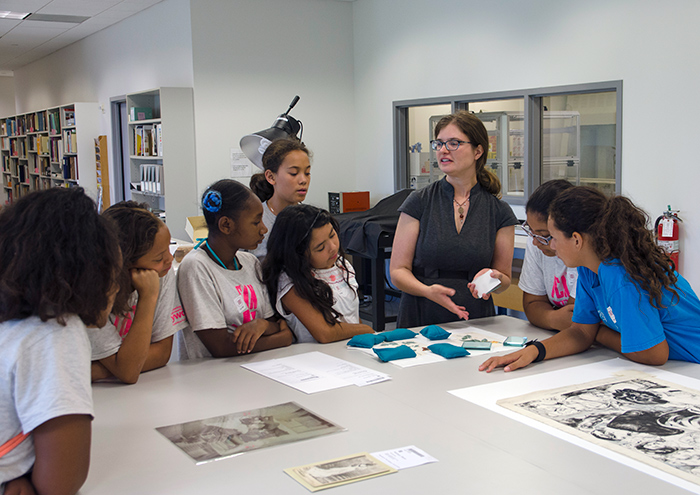
The final hands-on session offered a look at a slice of local history that the girls themselves are part of: that of the Pasadena YWCA. Clay Stalls, curator of California and Hispanic collections, displayed a selection of images from the organization’s photographic archive, which was donated to The Huntington. As the campers carefully turned the pages of old photograph albums filled with images of their counterparts from days gone by, they discussed the differences, and the similarities, of girls’ lives then and now. They saw prim young ladies doing needlework in a YWCA sewing class in 1912, 1920s flappers of the YWCA Business Girls’ Club performing as a ukulele trio, and fitness buffs in 1930s gym togs hanging upside down to promote the health benefits of exercise.
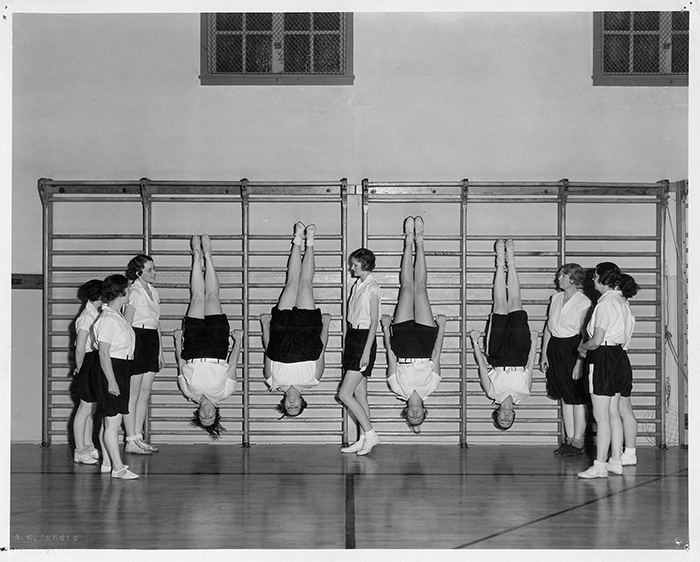
“It was a good opportunity for the YWCA campers to examine primary sources and see how these materials have value for understanding the history of an organization of which they are part,” says Stalls. He hoped the photos would spark reflections “not only about the present, but also about the past and its relationship to their present.”
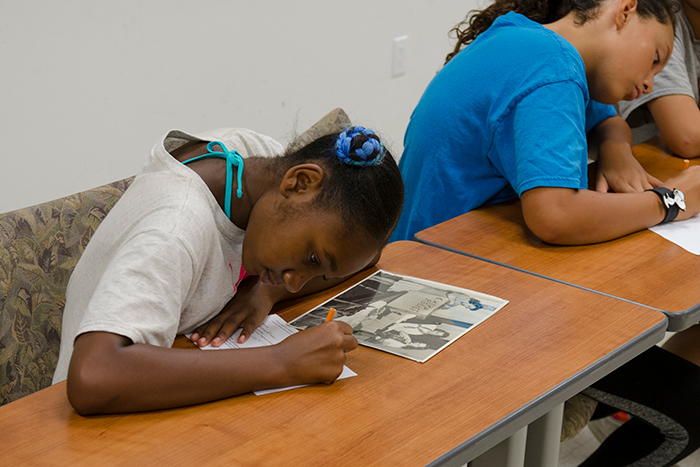
Using the new knowledge they had gleaned about the work curators do, the campers had one last assignment: to try their hands at being curators themselves by writing interpretive text for some of the historical YWCA photographs. Heads bent over their task, carefully noting dates and details, the girls embraced the challenge with enthusiasm. Was there a future curator in the group? Or an author, graphic artist, or conservation expert? Quite possibly! By gaining a perspective on the past, the possibilities of the future can come into sharper focus.
Lisa Blackburn is communications coordinator in the office of communications and marketing at The Huntington.

The Huntington’s blog takes you behind the scenes for a scholarly view of the collections.