Opening Hours
Daily: 10 A.M.–5 P.M.
Closed on Tuesdays
1151 Oxford Road
San Marino, CA 91108
Posted on Tue., July 21, 2015 by
A popular rule of etiquette recommends avoiding two topics in polite conversation: politics and religion. I would add a third—grammar. No discussion becomes more heated than a debate over whether it is acceptable to end a sentence with a preposition. Grammar provides the rules we use to clearly express our complex thoughts and emotions. So when we engage in a discussion about grammar, we sometimes trigger strong emotions.
Some people blatantly disregard the rules of grammar, and shame on them! But complicating the situation is the reality that these rules are constantly changing. Historians, anthropologists, and linguists know that language is culturally constructed, and that as culture changes, so too does language. Every quarter, for example, the editors of the Oxford English Dictionary add new words to their online dictionary to reflect current trends in language. Those changes are then added to their printed edition. (June’s update included “crowdfund,” for instance.) Rules from an 18th-century school primer would look quite odd to readers today. While we accept that language and the way we use it must change over time, those alterations make grammar-conscientious people anxious, if not downright angry.
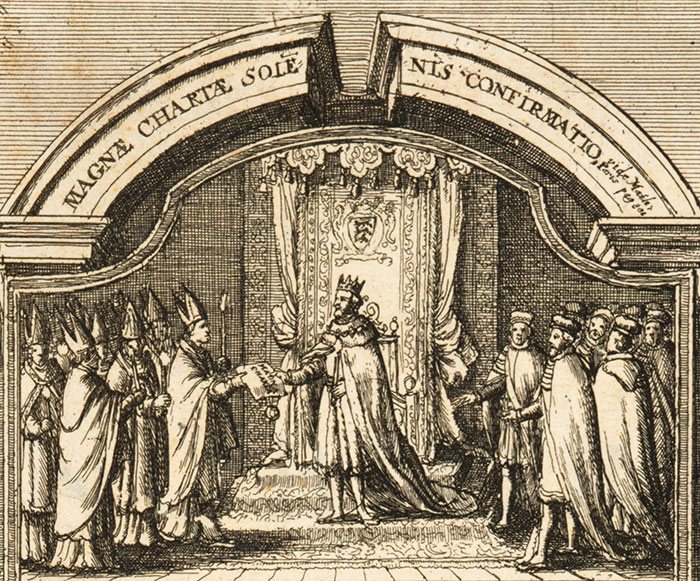
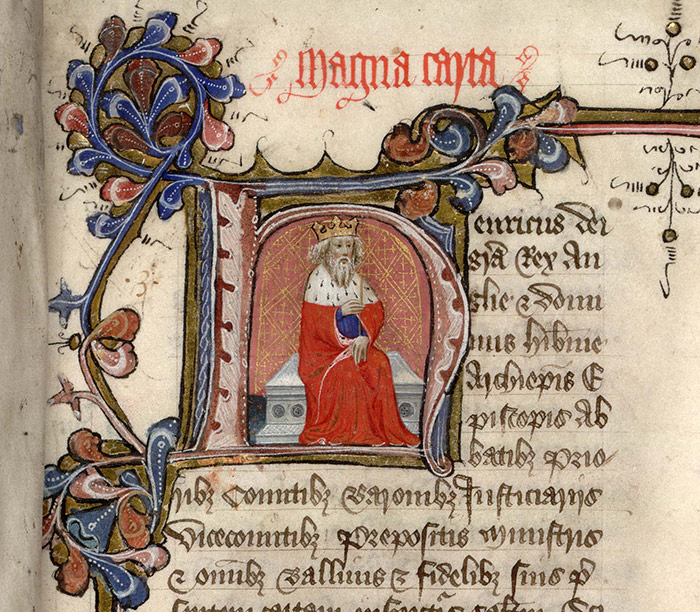
The Huntington recently opened a new exhibition: “Magna Carta: Law and Legend 1215-2015.” In preparation, people from across the institution engaged in thoughtful discussions as to whether the exhibition should be called “The Magna Carta” or “Magna Carta.” “The Magna Carta” just sounded right, but “Magna Carta" (without the “The”) is correct. This is because Latin doesn’t have articles; as a result, the Latin phrase “Magna Carta” doesn’t require a “The” in front of it. It is correct, however, to say “the 1215 Magna Carta” or “the Great Charter”—the first because “1215” serves as an adjective between the article “the” and the Latin phrase, and the second because English requires an article.
The current conversation about using “the” before “Magna Carta” is just the latest in a long history of discussions about the correct pronunciation of the Latin name for the Great Charter. Up through the 19th century, people frequently wrote “Magna Charta,” adding an “h” after the “C” in “Carta.” Both “Charta” and “Carta” are correct spellings, according to Latin convention, but both versions of the word should be pronounced with a hard “k” sound: “KAHR-tuh.”
Toward the end of the 19th century, many English-speakers were mispronouncing “Charta” with a “ch” sound. Orthoepists (people who study pronunciation) took issue with this. Those in the know began preferring the spelling of “Carta” as a way of pushing casual speakers to use the correct pronunciation.
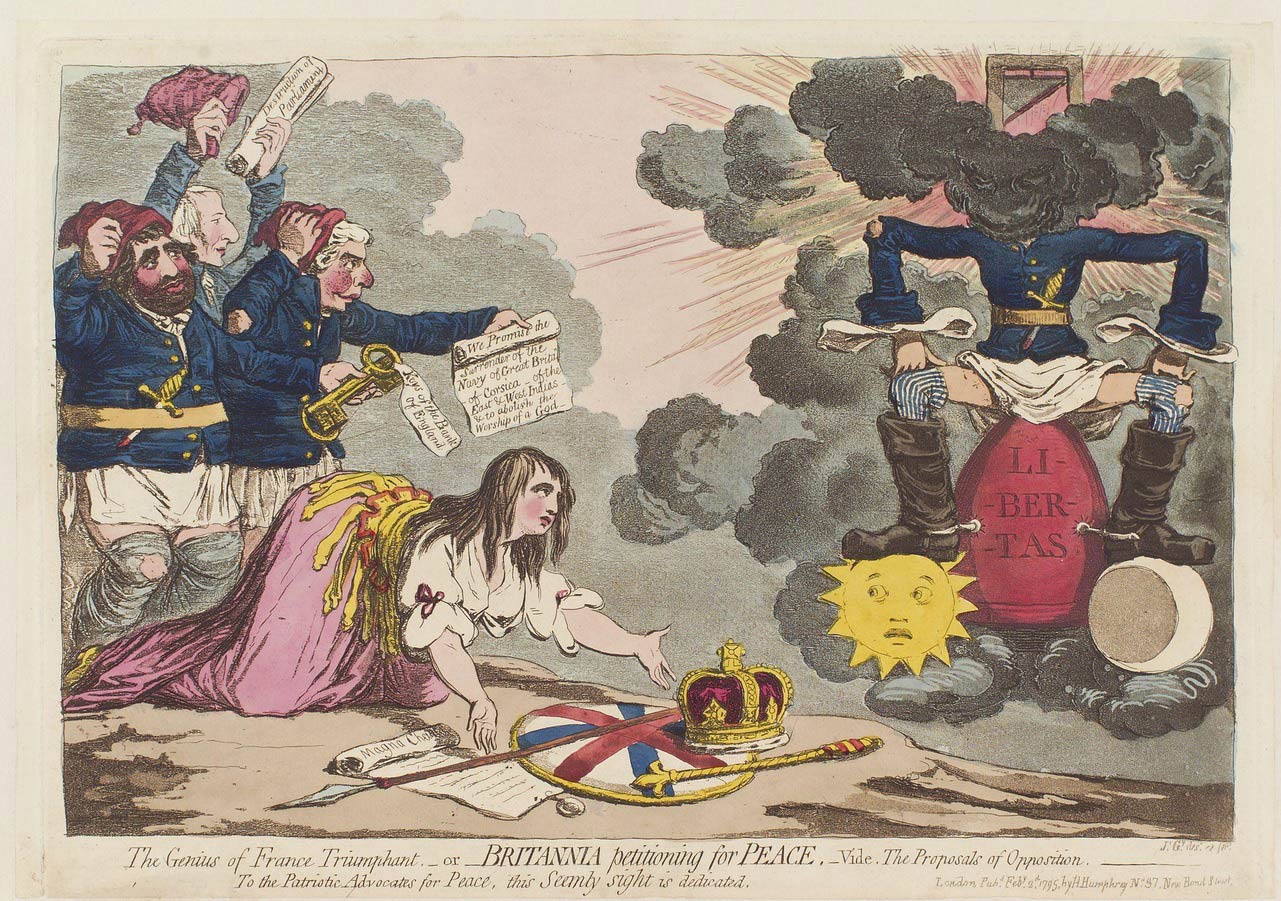
In the months that led up to the opening of the exhibition, I had the opportunity to speak with many groups about Magna Carta, its history, and its evolving meaning. The most common question I heard was this: “Why are you saying ‘Magna Carta,’ not ‘the Magna Carta’?” We are often sheepish about clarifying points that may seem obvious to others but make us feel ill-informed. I think it takes courage to ask this kind of question, and I greatly admire those who ask it. The truth is, language is slippery and the rules and conventions we cling to change over time. This question about using “the” before “Magna Carta” cuts right to the source of our insecurities.
The Huntington is a place where people come to learn, talk, and explore. Asking questions that make us uneasy is a necessary part of learning. Shifting trends in grammar certainly make us uneasy, but questions about language open up larger conversations about The Huntington’s collections and exhibitions. They encourage us to consider changes over time in new ways.
“Magna Carta: Law and Legend 1215–2015” runs through Oct. 12, 2015, in the Library’s West Hall.
Related content on Verso:
Running at Runnymede (June 9, 2015)
Vanessa Wilkie is William A. Moffett Curator of British Historical Manuscripts at The Huntington.
The Huntington’s blog takes you behind the scenes for a scholarly view of the collections.