Opening Hours
Daily: 10 A.M.–5 P.M.
Closed on Tuesdays
1151 Oxford Road
San Marino, CA 91108
Posted on Thu., April 14, 2016 by
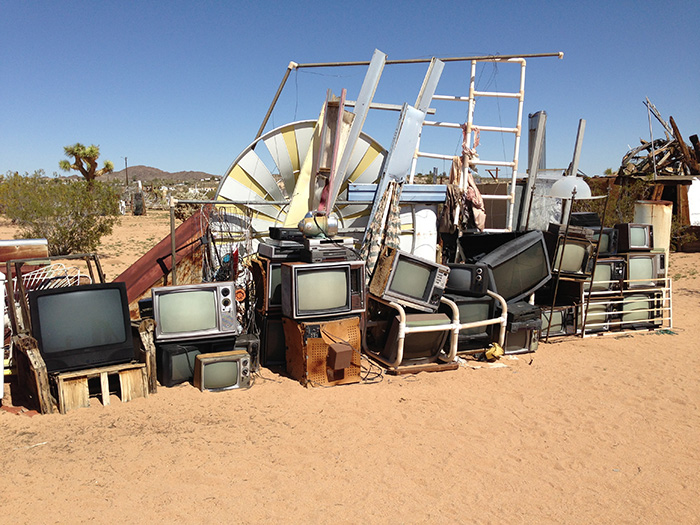
Humans have negotiated the desert for millennia, finding in it equal measures of sustenance, terror, beauty—and, above all, a dwelling place. To explore issues of human intervention in and on the American desert, my colleague James Nisbet and I have organized a conference at The Huntington titled “The Fabricated American Desert: Modern and Anti-Modern.” Supported by the Huntington-USC Institute on California and the West, the conference will take place April 15–16 in Rothenberg Hall.
The southwestern desert has long served as an allegorical landscape for a peculiar view of America. Implicated in the myths of Manifest Destiny and westward expansion, the desert has also been a place that signified America’s folklore inheritance of rugged individualism and glorified isolationism. As an austere, even radical environment—embodying remarkably harsh conditions and immense scale—the desert frames narratives of aesthetics, space, and habitation in stark, unforgiving terms that emphasize duration, timelessness, and the dwarfing of human perspectives.
At various points in U.S. history, the southwestern desert has attracted artistic and architectural movements that give visual and embodied form to these extremes. These include utopian architectural projects, such as Arcosanti and Taliesin West, as well as dystopian and alternative spaces of impermanent habitation, such as Slab City and Burning Man. The desert has also been a site for reimagining landscape and space in cultural production, as evidenced by elite mid-20th-century desert architecture in Palm Springs, land art installations, desert test sites, and junk sculpture.
The conference will deal with emerging research that explores relationships between the American desert, modernism, and man-made structures. In particular, it will address how the desert has figured as a ghost image and symbolic landscape of both modernist and anti-modernist spatial forms in the second half of the 20th century.
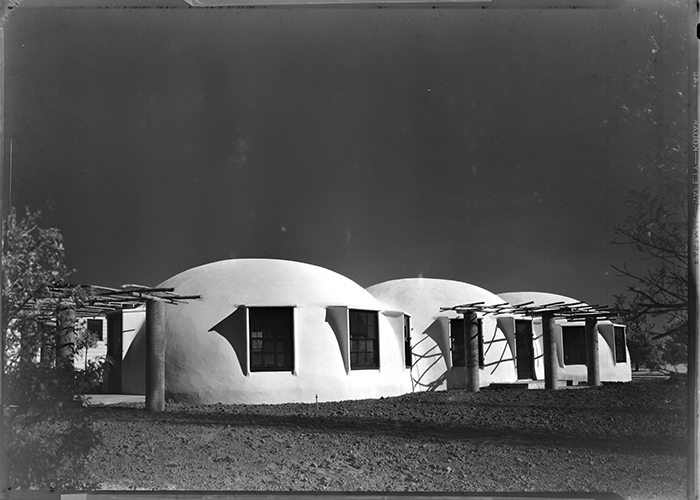
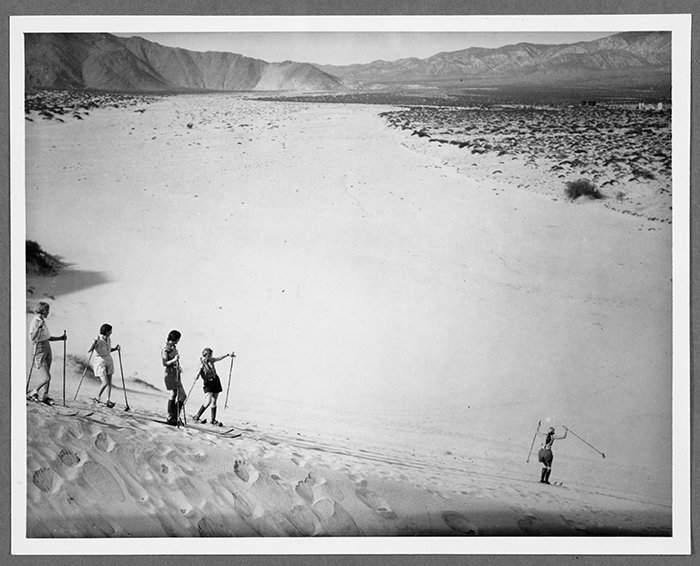
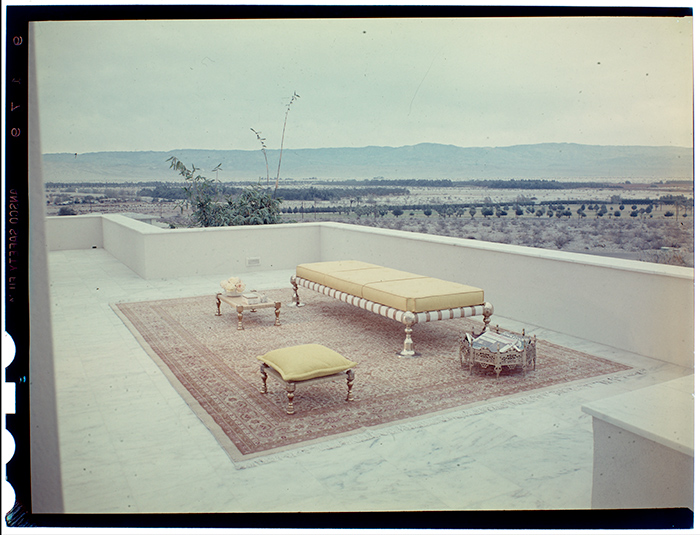
In correlation with the conference, Jessica Ziegenfuss, who is pursuing her doctorate in visual studies at University of California, Irvine, has curated and designed a fascinating online exhibition of images from The Huntington’s photography collections under the title A Desert Guidebook.
In her description of the exhibition, Zeigenfuss writes that the photographs show the landscape “as an ambiguous setting of achievement, innovation, and leisure as well as ruin and abandonment.”
“Taking uncertainty as its main theme, my exhibition explores the unexpected trappings of the desert landscape in the format of a critical guidebook. I hope that visitors glimpse the majestic, haunting, and oftentimes quirky aspects of the desert, all caught by intrepid 19th- and 20th-century photographers,” Zeigenfuss writes.
As the photographs make clear, the desert is as much a part of our productive past as it is of our constructive destiny.
You can read more about the conference program and registration on The Huntington’s website.
You can view the online exhibition A Desert Guidebook here.
Lyle Massey is associate professor of art history at University of California, Irvine.

The Huntington’s blog takes you behind the scenes for a scholarly view of the collections.