Opening Hours
Daily: 10 A.M.–5 P.M.
Closed on Tuesdays
1151 Oxford Road
San Marino, CA 91108
Posted on Thu., Jan. 7, 2016 by
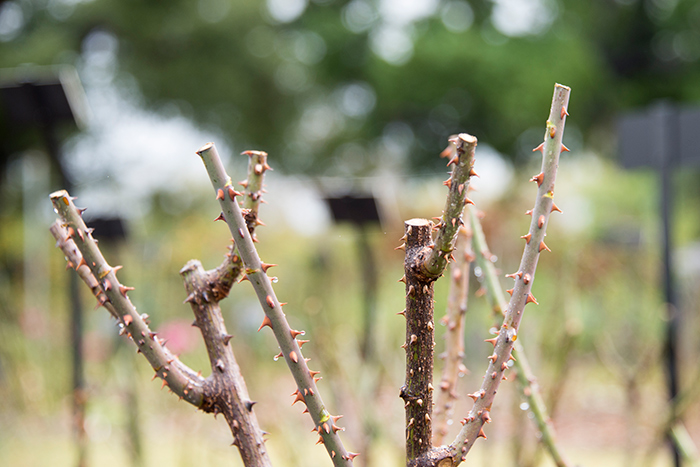
Earlier this month, a group of dedicated volunteers began the gargantuan task of pruning The Huntington’s more than 3,000 rose bushes. Hard pruning once a year keeps roses healthy and promotes blooming.
But how do you keep a garden looking its best when all you see is thorn-studded stubs robbed of their showstopper blooms? For Tom Carruth, the E. L. and Ruth B. Shannon Curator of the Rose Collections, the answer lies in planting mild-climate bulbs that bloom when their Rosaceae-family neighbors have just, well, lost their heads.
Carruth will offer tips on choosing and growing bulbs during “Bulbs and Roses: A Winning Combination,” a free public lecture on Thurs., Jan. 14, at 2:30 p.m. He’s had great success planting bulbs in The Huntington’s historic rose garden, with about 140 bulb plantings using roughly 60 varieties.
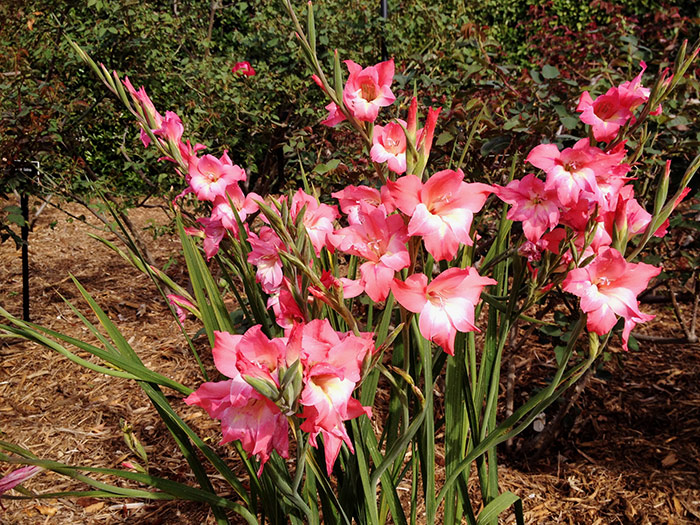
Bulbs and roses are natural complements to each other, says Carruth. They bloom at different times but share similar requirements for soil-type and watering schedule. Numerous public gardens, notably the Denver Botanic Gardens and the Brooklyn Botanic Garden, have combined roses with popular bulbs such as tulips, daffodils, or hyacinths. In our mild Southern California climate, these common bulbs don’t get the chill time they need to re-bloom.
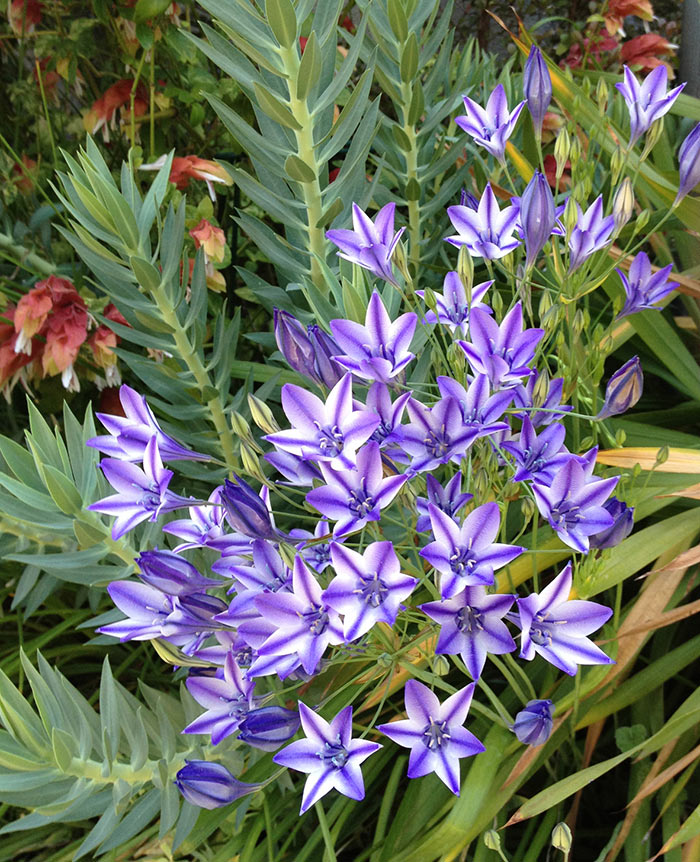
Instead, Carruth turns to offerings from southern Africa that come back annually with little extra care, such as Babiana, a genus from the Iridaceae family, which comes in many colors, including the gorgeous, deep blue or purple flowers you’ll see near our roses; Sparaxis, or harlequin flowers, in a rainbow of vibrant colors; or a variety of Bearded Iris called ‘Joseph’s Mantle’, a repeat-blooming bulb whose sword-like leaves create visual height. Other varieties Carruth recommends include Amaryllis, Ixia, Pineapple Lily, and the blue-purple Brodiaea.
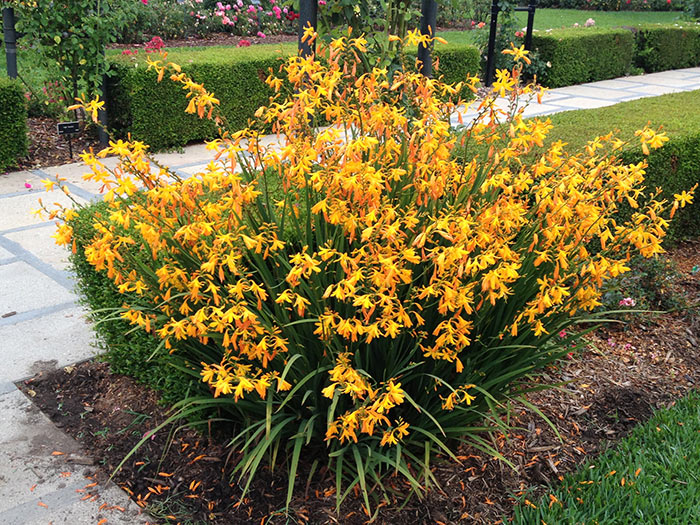
To find bulbs suited to this area, look for a West Coast supplier and read the fine print. Drought-tolerant bulbs will be easier to manage on a low-water budget. (Incidentally, they do just fine staying in the ground all year round—no complicated chilling techniques required.)
One warning from Carruth: once the bulb’s finished blooming, resist the urge to remove the wilted foliage until it’s fully brown; just let it die on its own. Those leaves furnish the nutrients that nourish next year’s bloom.
Overall, these mild-climate bulbs require little to no maintenance, re-bloom each year, and add colorful flowers that might just embolden you to give your roses the hard pruning they really want—and need.
Want to learn more? Join Carruth on Thurs., Jan. 14, at 2:30 p.m. in the Ahmanson Room of the Brody Botanical Center. No reservations required.
Diana W. Thompson is senior writer in the office of communications and marketing at The Huntington.

The Huntington’s blog takes you behind the scenes for a scholarly view of the collections.