Opening Hours
Daily: 10 A.M.–5 P.M.
Closed on Tuesdays
1151 Oxford Road
San Marino, CA 91108
Posted on Fri., Jan. 7, 2011 by

In 1438, renowned Italian painter Pisanello decided to adopt an art form that had been ignored since antiquity. He cast a portrait of John VIII Paleologus, emperor of Constantinople, in a bronze disk about four inches in diameter. The work was a commemorative medal honoring the dignitary's visit to a conference in Ferrara.A new collecting obsession was born'one that would attract the wealthiest and most erudite of Europe's upper classes for generations.
Inspired by the coins and medallions of ancient Rome, Renaissance medals were intimate collectibles that could be held in the hand and examined closely. They inspired conversation—even parlor games—testing participants' knowledge of politics, history, and culture. The front of a medal is usually a portrait, and the back displays an allegory, narrative, or heraldic device, accompanied by inscriptions.
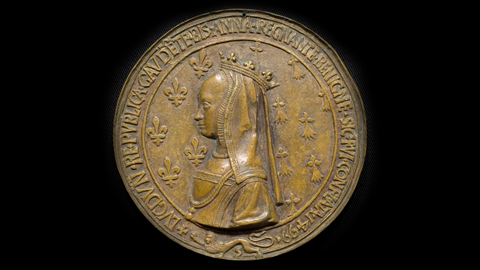
"The visual, tactile, and textual interplay of these objects allowed several levels of interpretation and enjoyment," says Catherine Hess, chief curator of European art at The Huntington. Hess encouraged the University Art Museum at the University of California, Santa Barbara, to loan the Pisanello medal to The Huntington along with 69 other examples; they form one of the most important collections of Renaissance medals in the world. A gift from industrialist and collector Sigmund Morgenroth, the invaluable medals will be on view in the east wing of the Huntington Art Gallery for about one year while the University Art Museum undergoes renovation.
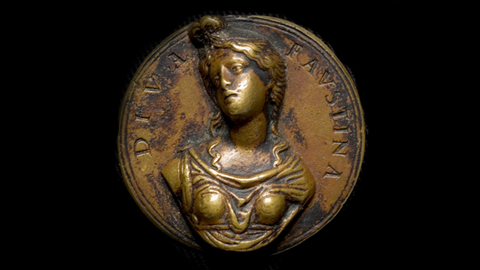
"Specialists come from far and wide to see the Morgenroth medals," said Hess. "And now we can all learn from these quintessential collectors' objects that scholars have called the most eloquent expression of the taste and intellectual life of the Renaissance."
Thea Page is arts writer and special projects manager in the communications office at The Huntington.

The Huntington’s blog takes you behind the scenes for a scholarly view of the collections.