Decorative arts
Dressing table
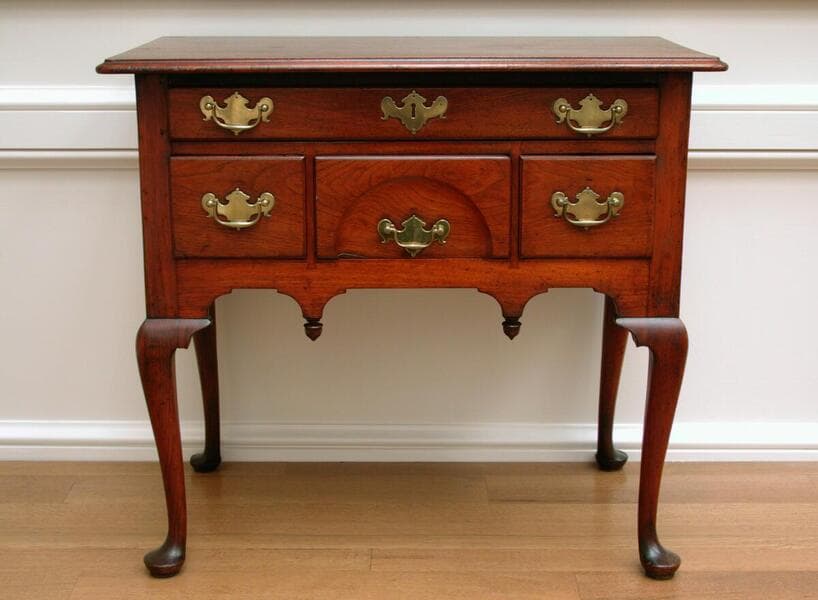
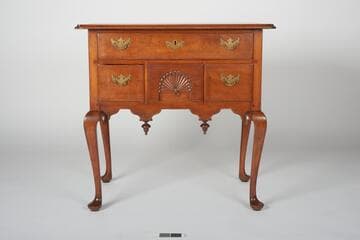
With its elegantly curving cabriole legs and pad feet, three flat arches across the front skirt, and mid-rib drops with distinctive acorn-shaped finials, this dressing table is a fine example of late baroque furniture in the Queen Anne style.
In the 18th century, dressing tables, also known today as lowboys, were frequently paired with high chests of similar design. As the name implies, they were used-most often by women-for applying makeup and dressing hair.
In the 18th century, dressing tables, also known today as lowboys, were frequently paired with high chests of similar design. As the name implies, they were used-most often by women-for applying makeup and dressing hair.