Decorative arts
Bowl
1 of 13
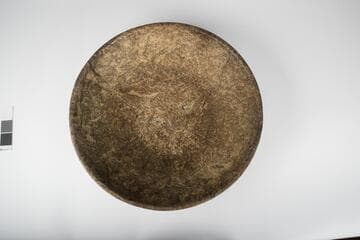
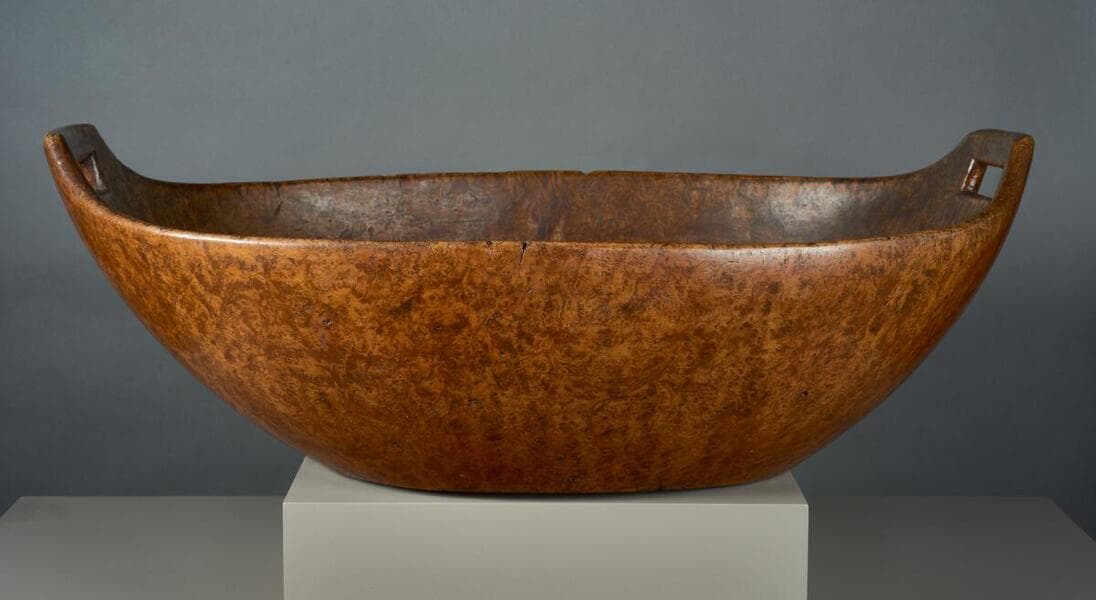
Large, ceremonial feasting vessels were common among native communities in New England and the Great Lakes region. Often made from the burl—the bulbous, cancerous growth on the side of a tree—the wood was especially hard because of its tight, swirling grain, which also made it difficult to carve. They were shaped by slowly burning down the surface with hot coals—the same way log canoes were made from felled trees. Bowls for ceremonial use typically feature effigy figures, like bears, beavers, or even humans, carved on opposite sides of the rim. This early bowl has handles instead, indicating that it was likely made not for native use but for white European settlers.