Decorative arts
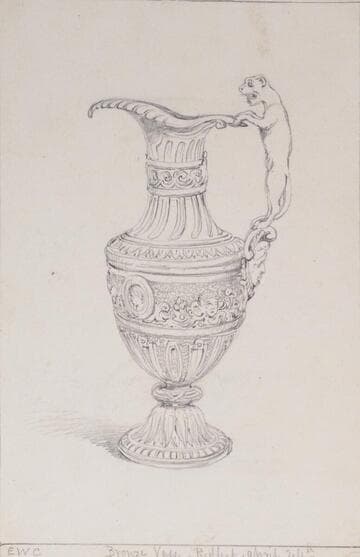
Ewer

1 of 13
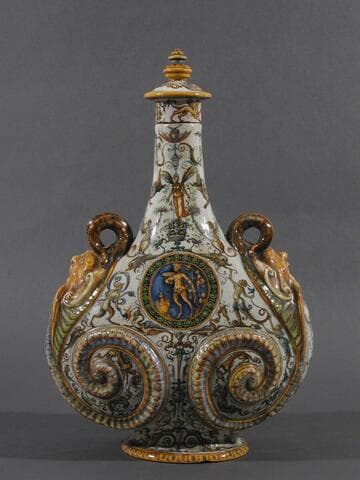
Maiolica was prized for the brilliant and refined quality of its decoration, made possible by the ceramics' tin-based glaze. The technique was developed by Islamic craftsmen and reached Italy in the late Middle Ages via North Africa and Spain. By the 16th century, Italian craftsmen began to paint detailed narrative scenes and, later in the century, grotesques, patterns of fantastic figures derived from ancient Roman wall paintings. Maiolica took many forms, including functional jars, bowls, and other wares as well as fancier works intended solely for display, such as the flask here, whose shape mimics the hollowed-out gourds in which travelers carried drinking water. The ewer is a rare surviving example of this elaborate shape; only one other is known, located in a private French collection.