Paintings
Meeting of Lear and Cordelia
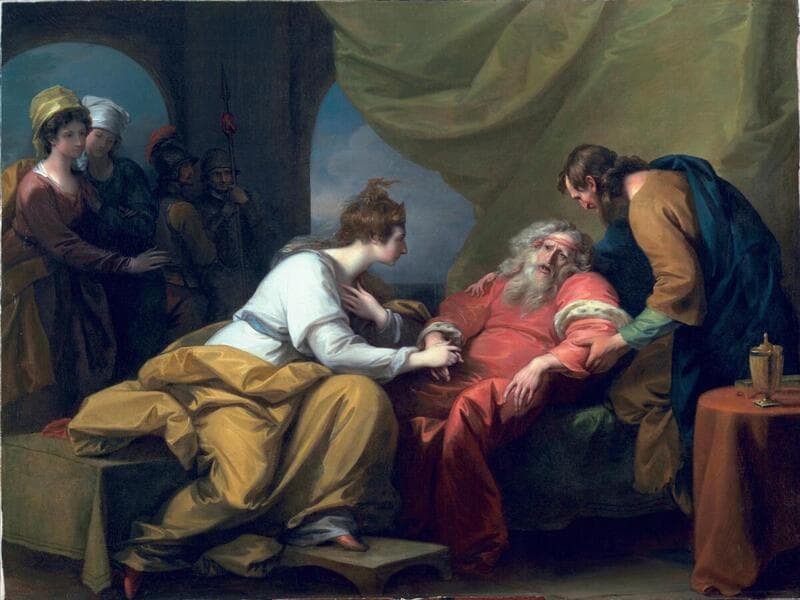
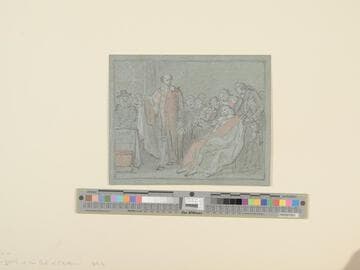
Shakespeare's plays were popular in late-18th-century Britain, and many artists, including American-born Benjamin West, depicted scenes from them. He painted four versions of Act 4, Scene 7 of King Lear, of which this is the earliest. In this scene Cordelia, King Lear's one loyal daughter, is reunited with her father, who has gone mad after dividing his kingdom between his fractious daughters Goneril and Regan and disowning Cordelia.
West's presentation of this climactic scene owed much to theatrical performances in the artist's day. Actors often wore red robes when portraying Lear, and Cordelia's diadem is similar to those that adorned stage princesses of the time. Cordelia's flowing hair indicates that she is moving toward her father, just as an actress would while performing the scene. The composition, with its simple architectural backdrop and narrow foreground space, also suggests a stage.
West's presentation of this climactic scene owed much to theatrical performances in the artist's day. Actors often wore red robes when portraying Lear, and Cordelia's diadem is similar to those that adorned stage princesses of the time. Cordelia's flowing hair indicates that she is moving toward her father, just as an actress would while performing the scene. The composition, with its simple architectural backdrop and narrow foreground space, also suggests a stage.