Sculpture
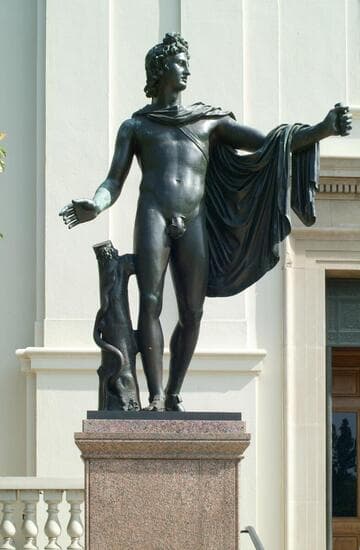
Apollo
Image not available
- Date
- ca. 1500
- Accession number
- 17.3
- Attributeds
- previously attributed to Camelio(Opens in new tab) (Italian)
- previously attributed to Caradosso(Opens in new tab) (Italian)
- previously attributed to the circle of Tullio Lombardo(Opens in new tab) (Italian, 1455–1532)
- previously attributed to Pier Jacopo Alari Bonacolsi Mantuan, called Antico(Opens in new tab) (Italian)
- Dimensions
- 15 3/8 in. (39.1 cm.)
- Medium
- bronze
- Description