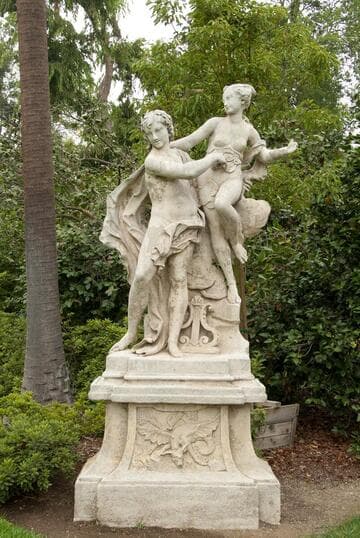
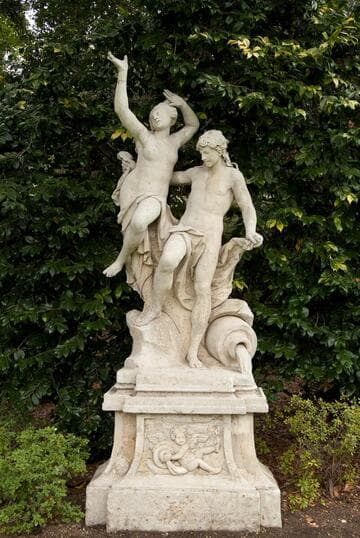
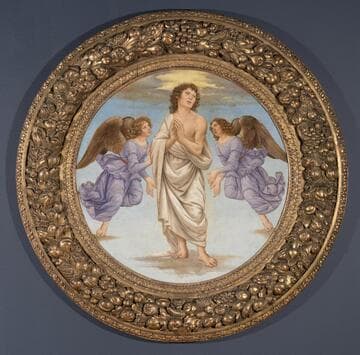
This sculptural group is inspired by the myth of Proserpina, the daughter of Jupiter and Ceres, found in both Ovid's Metamorphoses and Claudian's De Raptu Proserpinae. The artist represented the climactic moment of the story, when Pluto grabs Proserpina, who struggles against him as he carries her over the border of the underworld.
Credit
The Huntington Library, Art Museum, and Botanical Gardens. The Arabella D. Huntington Memorial Art Collection.
The spiraling pose of these two figures is reminiscent of Giambologna’s inventions of the previous century, while the theatricality is more typical of the Baroque period. When Bernini completed his large-scale marble of this subject in 1622, he is said to have amazed all of Rome. This bronze copy of Bernini’s original can be traced to a British purveyor of port in Portugal at the turn of the eighteenth century, making this cast of this subject after Bernini one of the earliest to have come to light.