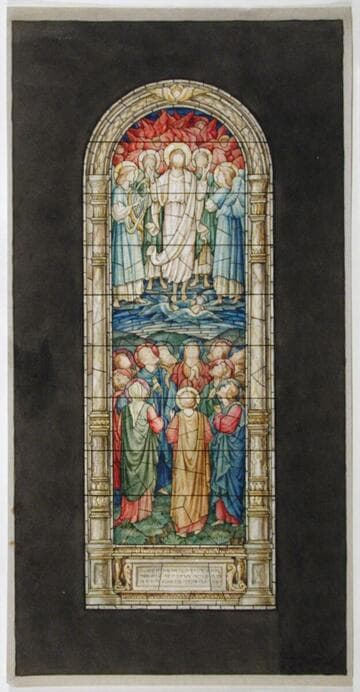
Drawings
Old Dispensation
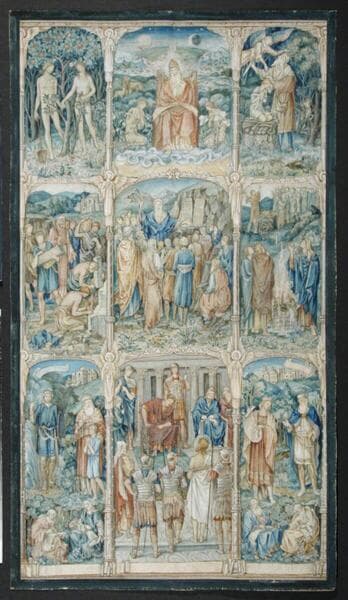
By the early decades of the twentieth century, the firm was making a concerted attempt to alter its style to meet the changing demands of fashion. The onset of the First World War further added to the difficulties faced by the firm's tapestry works, which was forced to close in 1916. Four years after the war, they reopened and were able to obtain a few important tapestry commissions, including one from George G. Booth (1864-1949) of Michigan for a church he was building in Cranbrook. Booth requested two tapestries illustrating stories from the Old and New Testaments, which were to be called "Old and New Dispensations." The tapestries, which were woven on the largest carpet loom at Merton Abbey, were each twenty-two feet high.