Visual Materials
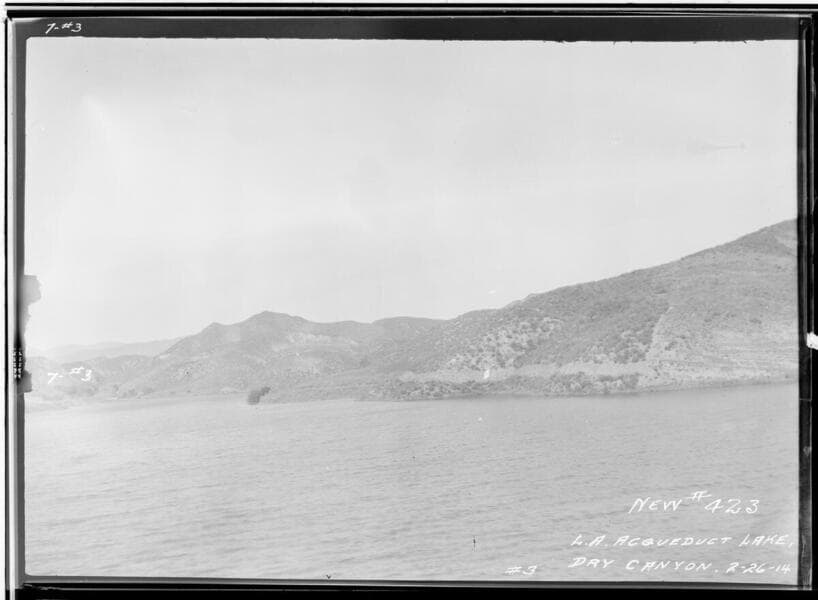
Reservoir at Dry Canyon
- Description
- Reservoir - at Dry Canyon - Los Angeles Aqueduct Lake.
- Date
- 2/26/1914
- Call number
- photCL SCE 03 - 00423
Daily: 10 A.M.–5 P.M.
Closed on Tuesdays
1151 Oxford Road
San Marino, CA 91108

Visual Materials
Reservoir - at Dry Canyon - Los Angeles Aqueduct Lake.
photCL SCE 03 - 00421
Visual Materials
Reservoir - at Dry Canyon - Los Angeles Aqueduct Lake.
photCL SCE 03 - 00425
Visual Materials
Reservoir - at Dry Canyon - Los Angeles Aqueduct Lake. Showing portion of dam in foreground.
photCL SCE 03 - 00422
Visual Materials
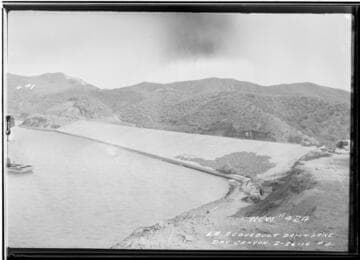
Los Angeles Aqueduct - Dam at Dry Canyon Reservoir.
photCL SCE 03 - 00424
Image not available
Manuscripts
Contains correspondence and data, project studies on Rampart Canyon Dam and Reservoir.
mssMorris, Samuel papers
Image not available
Manuscripts
Format of original: Reel. Description: Fictionalized account of the Los Angeles Aqueduct and the rise of hydroelectric power to fuel the growth of the city of Los Angeles; includes scenes of downtown and power plants, circa 1922. Produced by Robert Brunton for the Board of Public Service Commissioners of the City of Los Angeles. Detailed footage of downtown Los Angeles; Mayor Fred Eaton in his office; the Board of Public Water Commissioners in a meeting; William Mulholland surveying in the field, the aqueduct landscape and its infrastructure (Owens River Gorge, Long Valley Reservoir, Tinemaha Reservoir, Division Creek Power House, artesian wells, a cement plan at Monolith, CA, Haiwee Reservoir, and Jawbone, Pine Canyon, and Antelope Siphons). Film ends abruptly.
SCE MP 556