Rare Books
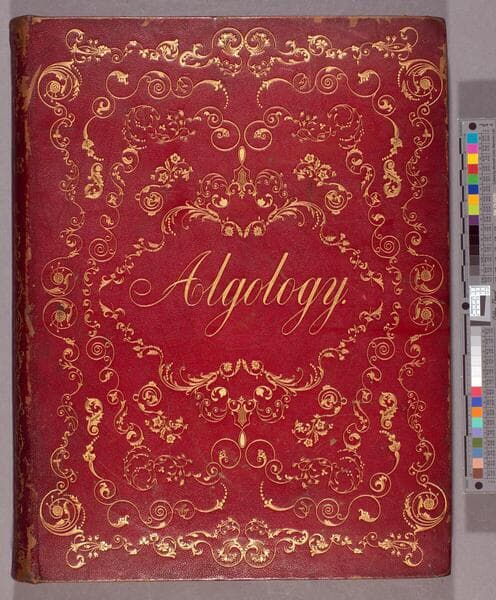
Algae and corallines, of the Bay and Harbor of New York : illustrated with natural types
1 of 80
Rare Books
Daily: 10 A.M.–5 P.M.
Closed on Tuesdays
1151 Oxford Road
San Marino, CA 91108

Image not available
Visual Materials
Photomontage showing half-length portraits of 42 Union officers and politicians from the American Civil War. Each portrait is numbered and corresponds to a printed index on the photograph's mount.
photOV 10185
Image not available
Rare Books
Manuscript specimen Fragment from a draft of chapter 7, page 148: "+ looking more nearly you may trace the branching of their fairy shining stems, + note the marvelous beauty of their [memorable?] flowers; the glumes + pales exquisitely penciled, + the yellow dangling stamens + feathery pistils. Beneath the lowest leaves of the grasses" Added images • Color frontispiece (same image as facing page 58): A Glacial Fiord • Facing page 14: Islands in the Inside Passage to Alaska. • Facing page 20: In Grenville Channel. • Facing page 32: An Indian Totem Pole at Wrangell. • Facing page 36: Alaskan Indians in Canoes. • Facing page 86: Luxuriance of Coastal Vegetation. • Facing page 90: Alaskan Chief and Totem-Pole at Wrangell. • Facing page 114: The Alaskan Coast Range, from a summit near Glenora Peak. • Facing page 122: Devil's-Club. • Facing page 128: Glacial Ice-Caves. • Facing page 148: Forest bordering a Stream. • Facing page 174: In Glacier Bay. • Facing page 176: Sunset in Glacier Bay. • Facing page 192: Stranded Bergs in Glacier Bay. • Facing page 218: Overlooking Lynn Canal. • Facing page 238: Alaska Indians employed at a Salmon Cannery. • Facing page 258: Alaska Salmon Crowding up Stream. • Facing page 260: Floating Icebergs. • Facing page 288: The Taku Fiord. • Facing page 290: The Taku Glacier. • Facing page 312: Dundas Bay. • Facing page 318: The Muir Glacier. • Facing page 330: Steamer "Queen." [Native Indian canoes in the foreground] • Facing page 334: The Norris Glacier. • Facing page 336: Early Morning in Glacier Bay. • Facing page 340: Ice-Cliff at the Foot of Muir Glacier.
646274
Image not available
Rare Books
Manuscript specimen Fragment of page 11 from a draft of chapter 7, page 149: "leaf + flower seems to have its winged representative overhead. Dragonflies soot in vigorous zigzags through the dancing swarms + a rich profusion of butterflies - the leguminosae of the insect kingdom make a fine addition to the general showy plants. Many of these at this elevation are a comparatively small + as yet but little known." Added images • Color frontispiece (same image as facing page 180): Sycamores on the San Felipe • Facing page 50: Hickories and Oaks on the Hickory Hill Farm. [1915] • Facing page 98: Bluffs along the Mississippi at McGregor, Iowa. • Facing page 102: The Wisconsin River at Portage, Wis. • Facing page 112: Across Lake Mendota toward the Buildings of the University of Wisconsin. [1915] • Facing page 158: The Meadow at Fountain Lake. [1915] • Facing page 170: The Hodgson Garden at Cedar Keys. [From an old photograph taken in 1867] • Facing page 178: An Orchard in Santa Clara Valley. • Facing page 182: Calochortus (Mariposa Tulip). • Facing page 198: Mt. Hoffman from Lake Tenaya. • Facing page 204: Yosemite Valley in Winter. • Facing page 230: The Glacier on Mt. Lyell. • Facing page 232: The Brown Cone of Mt. Dana. • Facing page 260: Emerson's House at Concord, Mass. • Facing page 298: Lake Tenaya, looking south. • Facing page 310: Hetch Hetchy Valley. • Facing page 326: An Earthquake Talus at the Foot of El Capitan, Yosemite Valley. • Facing page 328: The Upper Yosemite Fall. • Facing page 336: Sentinel Rock. • Facing page 340: "Bossy Cumuli" in the Sierra. • Facing page 364: The Royal Arches. [From near the point where Mr. Muir built his cabin in 1872] • Facing page 368: Sierra Primrose (Primula suffrutescens) on the summit of Clouds' Rest. • Facing page 380: Lewisia pygmaea (Alpine Bitter-root). • Facing page 388: Across the Middle Fork of the San Joaquin. • Facing page 392: In the Kern River Canyon. • Facing page 396: In the Great Tuolumne Canyon. • Facing page 398: Portrait of Mr. Muir in 1873.
646274
Visual Materials
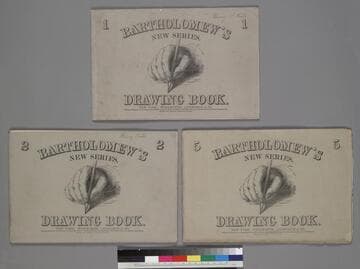
Three drawing books, entitled Bartholomew's Drawing Book, New Series, Nos. 1, 2 and 5, by William N. Bartholomew, published by Woolworth, Ainsworth & Co., New York, copyright 1867, 1869, and 1870 respectively. The exercises within each of the three books is comprised of 12 half-sheet numbered exercises interleaved with full-page blank leaves for copying and additional original artwork. Each book progress in level of difficulty, and the books themselves increase in their levels of complexity. Book 1 begins with exercises in drawing horizontal and vertical lines, and continues with using those lines in various combinations and patterns to draw simple designs and decorative forms. All of the exercises have been completed. On the inside front cover are notes and instructions for the series. Book 1 is missing the back cover; instructions for lessons 4 and later are missing. Book 2 incorporates angled straight lines, introduces curved lines, and begins to explore leaf and plant forms. These exercises are considerably more complex than those found in Book 1. Some of the exercises have been completed; primarily those at the very beginning and the very end of the book. The inside front cover contains notes about materials, notes to the teacher, and instructions for lesson 1. The back cover is also lacking. The 12 numbered exercises in Book 5 are of plants and flowers. Some of the images include pansies, lily of the valley, and a rose. Most of the exercises have been copied, and there are additional original drawings, some dated by the artist. The inside of the front cover contains notes about the materials to be used for this book and general remarks. The inside of the back cover contains instructions for using and copying the 12 lessons within the book. The outside back cover is a publisher's advertisement for various items within the "Bartholomew's System of Drawing", including writing and drawing slates, drawing books, drawing cards and a teacher's guide. The paper wrapper added by (presumably) Alice Dodge contains pencil sketches and doodles. "Henry I.[?] Tubbs" is written in ms. on the front covers of Books 1 and 2 in the upper right-hand corner. "Alice Dodge, Sept. 28, 1871" is written in ms., in pencil, across the top cover of Book 5.
ephKAEE
Image not available
Rare Books
Manuscript specimen Fragment from a draft of chapter 7, page 159: "not subject to floods have been dammed at short intervals by the fall of trees. Some of the most delightful emerald moss bogs to be found in the entire Sierra originate in this way." Added images • Color frontispiece (same image as facing page 148): Outlet of Muir's Lake • Facing page 16: Ruins of Dunbar Castle. [From a painting by C. Stanchfield, R.A.] • Facing page 50: A Wisconsin Landscape, on the way to Fountain Lake. • Facing page 58: A Nighthawk's Nest. • Facing page 62: A Passing Thunder-Storm. [On the Hickory Hill Farm] • Facing page 66: West Bank, by Fountain Lake. • Facing page 94: A Boat on Fountain Lake. • Facing page 96: Pasque-Flowers. • Facing page 100: Huckleberries. • Facing page 104: Lake Mendota, Wisconsin. • Facing page 114: The Broad Fox River Meadows. • Facing page 142: A Muskrat Cabin. • Facing page 148b: A Mountain Marmot. • Facing page 164: Ice-coated Trees. • Facing page 180: Hickory Hill Farm. • Facing page 186: The Hickory Hill Ridge. • Facing page 216: Clipping from the Wisconsin State Journal of Sept. 26, 1860, containing a reference to John Muir's clocks. • Facing page 222: North Dormitory, University of Wisconsin. [Mr. Muir's room was the corner room on the ground floor] • Facing page 254: Entrance to Mammoth Cave. • Facing page 270: The Clinch River, Tennessee. • Facing page 290: A Southern Pine. • Facing page 300: A Moss-draped Pine. • Facing page 316: The Unfamiliar Florida Coast. • Facing page 336: A Palm Landscape. • Facing page 350: Flower-Spike and Leaves of the Spanish Bayonet. • Facing page 354: Lime Key, off the Coast at Cedar Keys.
646274
Manuscripts
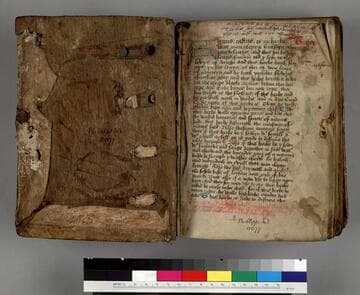
ff. 1-40v. [Agnus castus]. Incipit: Agnus castus is an herbe that men clepyn Tutsayn other parkeleuys and this herbe hath leuys sumdele red yleke to the levys of Arage. Explicit: Also if a man haue grete itchyng in his Bodi take the Ius//. English. G. Brodin, ed., Agnus Castus: a Middle English Herbal Reconstructed from Various Manuscripts. Essays and Studies on English Language and Literature 6 (Copenhagen and Cambridge, Mass., 1950) 119-201; HM 58 not recorded; the text shares characteristics with Brodin's groups I and II, but many readings resemble the variants listed for London, Brit. Lib., Roy. 18.A.VI, the representative of group II. One leaf missing after f. 8 with loss of most of the entry for "Betonia"; between the entries for "Costus" and "Dragancia," ff. 15v-16, fourteen herbs not copied (contemporary note, f. 16, lists seven missed herbs); on f. 18v, ten lines cancelled and f. 19, a singleton, inserted by the scribe to allow for otherwise missed entries; other herbs occasionally missed; breaks defectively in the entry for "Rosa marinus," although the text may have been completed on the 4 leaves now missing after f. 40. See also A. Zettersten, "A Manuscript of 'Agnus Castus' in the Huntington Library," Notes and Queries 216 (1971) 130-31. ff.8v, 11v, 19v, 23v, 31v, 33, 34, 38v, 39, 41-42v. [Medical recipes]. English. Twenty-nine medical recipes added by several contemporary and later hands in the blank spaces left by the scribe of Agnus Castus in order to begin a new letter of the alphabet at the top of a page; ff. 41-42 were blank leaves completing the quire at the end of Agnus Castus; the recipe on f. 41 begins defectively. On f. 19v, a charm in verse against worms in children; on f. 41v, a charm "For to wynne at dyce." A recipe on f. 31v ends "probatum est per Iohannem Denys," referring to the surgeon John Denyse, whose name appears in records 1475-96/97; see C. H. Talbot and E. A. Hammond, Medical Practitioners in Medieval England (London 1965) 140-41. In a seventeenth century hand in the lower margin of f. 41v: "Master Whettons electuarie for the stone. It is to be sold at Master Spichforkes an apothicarie in chepeside nere the greate cundit there...it is also to be had att the golden morter next shopp to Master Spichforke in chepeside...". f. 43-93v. Forto make a water that is ycleped maidons melke that shal don awai sausefleme and the rede Goute in the visage [i.e. Medical recipes and charms]. Incipit: Take lytarge of Golde and stamp itt ynto poudre. Explicit: And then stille itt yn a lymbak with eesy fyre. Rubric: Forto make a water that is ycleped maidons melke that shal don awai sausefleme and the rede Goute in the visage. English. Approximately 253 recipes, including 2 for the ointment Gracia dei, "that the Ladi Beauchamp used the Erlis wiff of Warweke" (f. 52v) and another "that þe gode Erle of herforde used þat was yhold a noble and Gracyus Surgierer" (f. 53); the non-medical recipes are: f. 69, an incantation against thieves; f. 75v, an incantation to staunch blood; ff. 81v-82, indices to determine if a sick person will live or die; f. 82r-v, means of determining if a pregnant woman is carrying a boy or a girl; f. 84, an incantation for a speedy delivery in childbirth; f. 84r-v, an incantation to deliver a stillborn child; ff. 87v-88v, a passage on the virtues of "betayne." In the margins next to the 4 incantations, in the hand of the scribe, "Prohibitum est exercicium ab Ecclesia catholica." Nine recipes added in contemporary and later hands on ff. 76, 86, 88v, 93v. On ff. 43-62 only, initials added in the margin representing the main word of the rubric, as if in preparation for an alphabetical subject index, e.g. f. 43: "m" for "maidons melk," "p" for "polus rubius," "o" for "oynement"; f. 43v: "c" for "cancrum," "w" for "webbe." On ff. 94-95v (misbound), part of a table of contents for these recipes but possibly copied from a different book.
mssHM 58