Visual Materials
Blanchard Music & Art Building, Broadway between Second and Third Street, 1905

You might also be interested in
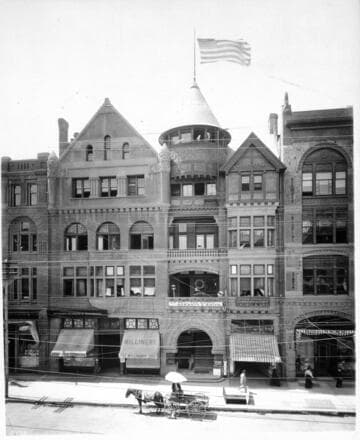
Y.M.C.A. building on Broadway near 2nd Street, Los Angeles. 1900
Visual Materials
A view of the Y.M.C.A. building; various stores in the building and buildings adjacent and a carriage and pedestrians on the street.
photCL Pierce 00062
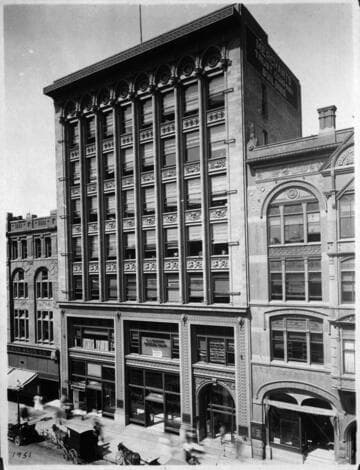
Merchant’s Trust Company Building, Broadway, Los Angeles
Visual Materials
A view of the Merchants Trust building with carriages on the street and various other stores in the upper floors.
photCL Pierce 00047
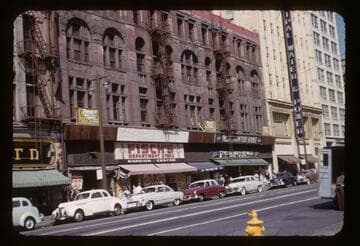
Old Coulter Building on Broadway between 2nd and 3rd Streets
Visual Materials
This collection consists of 35mm Kodachrome slides taken between 1954 and 1972. This collection of photographs taken by amateur photographer Palmer Conner documents by street the physical and social changes of Bunker Hill during the earliest stages of redevelopment. The collection is particularly strong in its depiction of the Bunker Hill neighborhood of downtown Los Angeles during redevelopment in the 1950s. Images chiefly consist of views of commercial and residential building exteriors taken from the street, including images of both new construction and older buildings in the process of being demolished.
photCL 486
Image not available
Broadway (Fort Street)
Visual Materials
The collection consists of 3511 photographs, negatives and ephemeral items circa 1850s-1982 covering a wide breadth of subject matter. The collection includes images of Los Angeles streets and city views; neighborhoods (including Olvera Street, the Plaza, and Chinatown); Los Angeles office buildings and blocks, municipal buildings and facilities (including city halls, court houses, federal buildings, and postal facilities); Los Angeles County communities (including Culver City; Beverly Hills; Watts; Compton; the Hollywood/Cahuenga area; Mt. Washington; Redondo Beach; Hermosa Beach; Venice Beach; Santa Monica; San Pedro; Wilmington; Long Beach; Burbank; Glendale and the San Fernando Valley; Pasadena and the San Gabriel Valley; Avalon and Santa Catalina Island); San Gabriel and San Bernardino Mountains; San Diego, Orange, Riverside, San Bernardino, and San Francisco Counties; Los Angeles County homes, residential buildings, and gardens; Los Angeles parks; Los Angeles, Orange, and Riverside County schools, colleges and universities; Los Angeles County churches and synagogues; Los Angeles area country clubs; hotels and theaters in Los Angeles, Riverside, San Diego, San Bernardino Counties, and the city of San Francisco; and Los Angeles County department stores, newspaper buildings, storefronts, and restaurants. General subjects represented in the collections include industry and manufacturing (including iron and steelworks; brick and terracotta; the motion picture industry; and the clothing trade); agriculture; mining and other extractive industries; infrastructure (including dams and roads, and photographs taken for Caltrans documenting the construction of the Pasadena Freeway, also known as the Arroyo Seco Historic Parkway); water and power (including photographs depicting the irrigation of the San Fernando Valley in the 1910s); transportation; sports and leisure activities (including images depicting the 1932 Olympics in Los Angeles); fairs and expositions (including trade and industrial fairs; the Panama Pacific Exposition; the California Pacific International Exposition; the Lewis and Clark Centennial Exposition; and the Alaska-Yukon-Pacific Exposition); fiestas and parades (including the Fiesta de Los Angeles, the Fiesta de las Flores, and the Pasadena Tournament of Roses), circuses and circus wagons; missions in California, the Southwest United States, and Mexico; and California adobes and ranchos. Miscellaneous images include national and state parks; the California Gold Rush and mining towns; the armed forces in California; native and indigenous culture; local flora, including trees; unidentified people; unidentified scenery; documents; maps; and a small grouping of ephemera pertaining to the Wilshire Boulevard Miracle Mile. The collection includes photographs produced by 141 identified photographic studios, photographers, and publishers including Blanchard; Cromwell and Westervelt; Frasher's Studio; Garden City Foto; Harold W. Grieve, T.E. Hecht; William Henry Hill; Keystone Photo Service; Luckhaus; Charles F. Lummis; F.H. Maude; Harold Parker; Putnam Studios; F.H. Rogers; Julius Shulman; Spence Airplane Photos; Stagg; A. Sturtevant; Carleton Watkins; and "Dick" Whittington Studio. There are also photographs made by or for companies including American Trona Corporation; Douglas Aircraft; Estelle Mines Corporation; Metro-Goldwyn-Mayer; Paramount Pictures; Selznick International Pictures; Studebaker Corporation; Union Pacific Railroad; and United Artists. Images produced and compiled by the Federal Writers' Project Southern and Northern California branches include photographs by Viroque Baker, Horace Bristol, Burton Burt, Fred William Carter, Fred R. Dapprich, Luckhaus Studios, Julius Shulman, and Art Streib.
photCL 400 volume 1
Image not available
Garland, William: Theatre and office building, Broadway between Seventh and Eighth, Los Angeles
Visual Materials
This collection contains original architectural drawings and microfilm of drawings and correspondence from architectural firm Morgan, Walls & Clements, dating between 1895 and 1960. Some material bears the names of forerunner and successor firms during those years, particularly Stiles O. Clements, who practiced on his own beginning in 1937. Materials include sets of original drawings for 129 projects from 1900 to 1960, and microfilm of drawings for more than 600 projects from 1895 to 1951, as well as over 10,000 pieces of business correspondence from the 1930s. Many of the plans are incomplete, and this material represents only a portion of the firm's entire output. The microfilm was created by the firm after 1951. The majority of projects represented are commercial buildings in downtown Los Angeles, Hollywood, and the Wilshire Boulevard corridor. They include theaters, office and store buildings, banks, industrial warehouses, manufacturing plants, apartment buildings, and schools, among others. Some projects are in cities and communities of greater Los Angeles County, and three are in Arizona and Oregon. The firm was known for large-scale Art Deco and Streamline Moderne buildings, contributing many significant public buildings to Los Angeles between the wars. Notable projects in the collection are: the Pellissier Building and Wiltern Theater, the Hollywood Turf Club, Richfield Tower (demolished), the Samson Tire and Rubber Company, Music Box Theater, and the Mayan Theatre. (There are no drawings for the Richfield Tower or El Capitan Theater, two of their well-known buildings.) In the 1930s and 1940s, under Stiles Clements, the firm designed many Streamline Moderne-style Ralph's Grocery Company markets, and Sears department stores. There are a few residential projects, including original drawings for the Merritt Adamson residence in Malibu (Adamson House), and Malibu pioneer May K. Rindge's residence. There are also six blueprint drawings for the residence of Octavius W. Morgan Jr. in Los Angeles.
archMWC
Image not available
Main Street including views of the Pico House, Merced Theater, Federal Building and Baker Block
Visual Materials
The collection consists of 3511 photographs, negatives and ephemeral items circa 1850s-1982 covering a wide breadth of subject matter. The collection includes images of Los Angeles streets and city views; neighborhoods (including Olvera Street, the Plaza, and Chinatown); Los Angeles office buildings and blocks, municipal buildings and facilities (including city halls, court houses, federal buildings, and postal facilities); Los Angeles County communities (including Culver City; Beverly Hills; Watts; Compton; the Hollywood/Cahuenga area; Mt. Washington; Redondo Beach; Hermosa Beach; Venice Beach; Santa Monica; San Pedro; Wilmington; Long Beach; Burbank; Glendale and the San Fernando Valley; Pasadena and the San Gabriel Valley; Avalon and Santa Catalina Island); San Gabriel and San Bernardino Mountains; San Diego, Orange, Riverside, San Bernardino, and San Francisco Counties; Los Angeles County homes, residential buildings, and gardens; Los Angeles parks; Los Angeles, Orange, and Riverside County schools, colleges and universities; Los Angeles County churches and synagogues; Los Angeles area country clubs; hotels and theaters in Los Angeles, Riverside, San Diego, San Bernardino Counties, and the city of San Francisco; and Los Angeles County department stores, newspaper buildings, storefronts, and restaurants. General subjects represented in the collections include industry and manufacturing (including iron and steelworks; brick and terracotta; the motion picture industry; and the clothing trade); agriculture; mining and other extractive industries; infrastructure (including dams and roads, and photographs taken for Caltrans documenting the construction of the Pasadena Freeway, also known as the Arroyo Seco Historic Parkway); water and power (including photographs depicting the irrigation of the San Fernando Valley in the 1910s); transportation; sports and leisure activities (including images depicting the 1932 Olympics in Los Angeles); fairs and expositions (including trade and industrial fairs; the Panama Pacific Exposition; the California Pacific International Exposition; the Lewis and Clark Centennial Exposition; and the Alaska-Yukon-Pacific Exposition); fiestas and parades (including the Fiesta de Los Angeles, the Fiesta de las Flores, and the Pasadena Tournament of Roses), circuses and circus wagons; missions in California, the Southwest United States, and Mexico; and California adobes and ranchos. Miscellaneous images include national and state parks; the California Gold Rush and mining towns; the armed forces in California; native and indigenous culture; local flora, including trees; unidentified people; unidentified scenery; documents; maps; and a small grouping of ephemera pertaining to the Wilshire Boulevard Miracle Mile. The collection includes photographs produced by 141 identified photographic studios, photographers, and publishers including Blanchard; Cromwell and Westervelt; Frasher's Studio; Garden City Foto; Harold W. Grieve, T.E. Hecht; William Henry Hill; Keystone Photo Service; Luckhaus; Charles F. Lummis; F.H. Maude; Harold Parker; Putnam Studios; F.H. Rogers; Julius Shulman; Spence Airplane Photos; Stagg; A. Sturtevant; Carleton Watkins; and "Dick" Whittington Studio. There are also photographs made by or for companies including American Trona Corporation; Douglas Aircraft; Estelle Mines Corporation; Metro-Goldwyn-Mayer; Paramount Pictures; Selznick International Pictures; Studebaker Corporation; Union Pacific Railroad; and United Artists. Images produced and compiled by the Federal Writers' Project Southern and Northern California branches include photographs by Viroque Baker, Horace Bristol, Burton Burt, Fred William Carter, Fred R. Dapprich, Luckhaus Studios, Julius Shulman, and Art Streib.
photCL 400 volume 1