Visual Materials
Nau-bua-shi-ta, Medicine Man of the White Mountain Apaches at Fort Apache
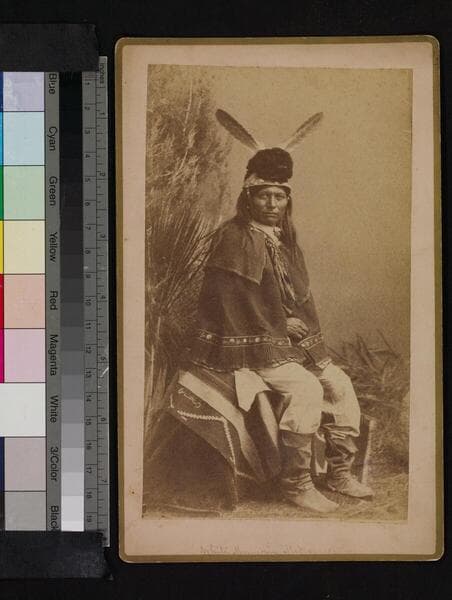
1 of 2
Visual Materials
Daily: 10 A.M.–5 P.M.
Closed on Tuesdays
1151 Oxford Road
San Marino, CA 91108

Image not available
Visual Materials
This disbound album contains 123 photographs taken by photographer A. Frank Randall between 1883 and 1888. The images include studio and field photographs of Apache Indians taken during the United States military campaign to capture Apache renegades during the Apache Wars. The majority of Randall's photographs are portraits of men, women, and children from various Apache tribes in Arizona and New Mexico. Among these photographs are images of a fox tamer; a fiddler; a flutist; a well-dressed, possibly high ranking Apache man; medicine men; young girls; mothers and their infant children; and Apache chiefs. Portraits of United States Army officers and scouts include Nelson A. Miles, Leonard Wood, Wilber E. Wilder, Roger Ames, Henry W. Lawton, William A. Thompson, Amos S. Kimball, John A. Dapray, Thomas J. Clay, Frank P. Bennett, Buffalo Jack, an Arizona female scout, and Apache scouts. Randall also included photographs of Rancho Camulos, many of which show people dramatizing scenes from Helen Hunt Jackson's novel "Ramona." Antonio Franco Coronel appears in some scenes. Other images include views of Missions Santa Barbara and San Juan Capistrano, what may be Vasquez Creek and Tujunga Canyon near Los Angeles, and views of Guaymas, Mexico.
photCL 101
Visual Materials
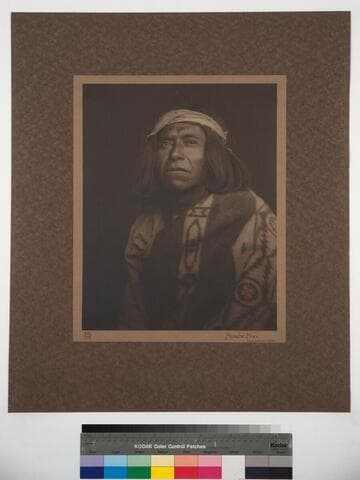
Portrait of an Apache man with a blanket over his shoulder.
photCL 313
Visual Materials
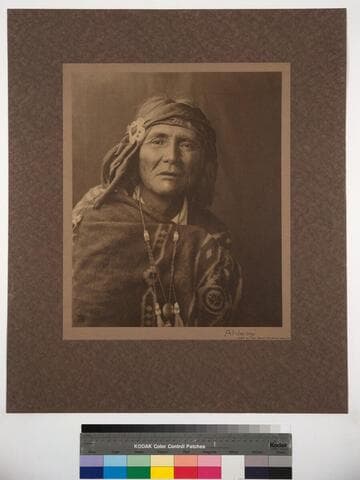
Portrait of an older Apache man wrapped in a blanket and wearing a long necklace.
photCL 313
Image not available
Visual Materials
A carte-de-visite portrait of a Filipino man standing in front of a bare wall, wearing a shirt, pants and a woven hat. There is no writing or stamp on the back of this print, but another copy of this photograph (photPF 26040) is dated January 28, 1870, and has the photographer's stamp: A. Honiss, Escolta, Manila.
photPF 26039
Image not available
Visual Materials
This collection of photographs documents Native Americans living in Arizona, New Mexico and Oklahoma between 1904 and 1917. The primary tribes represented are Hopi, Navajo and Taos Pueblo Indians, but there are also Osage, Apache and several other Southwestern tribes. There are many portraits, as well as posed, romantic scenes depicting storytelling, hunting, weaving, or playing instruments. Additional candid views show people in their daily activities, pueblos, and dance ceremonies. In a letter to Henry Huntington, Feb. 12, 1923, Moon describes these photographs as "a complete collection of my Indian pictures made from the beginning of my work in 1904 to 1917. It includes ... the pick of the Fred Harvey collection that I made for them during the period of my contract with them, 1907 to 1914, and my own collection made since the latter date." Besides the portraits, there are scenes of Indians in their daily activities, including baking bread in outdoor ovens, gathering water in pots, riding horses and tending livestock. There are also views of the Hopi Snake Dance, and the Corn Dance at Santo Domingo.
photCL 313
Image not available
Visual Materials
A disbound album of primarily portrait photographs of Plains Indians, taken by photographer William E. Irwin from the 1890s to early 1900s, in Indian Territory. His images document the Chiricahua Apache, Comanche, and Kiowa Indians who lived near Anadarko and Fort Sill, Oklahoma; some photographs may have been taken at Irwin's studio at Chickasha, Indian Territory. Besides the studio and field portraits, there are also candid views illustrating late 19th-century Plains Indians in their daily lives; several views of cowboys and cow herding; Fort Sill; tepees; landscapes; and one view of a Wichita Indian grass house or wickiup. Notable portraits include those of Geronimo, seated, posing with headdress and revolver; Appeahtone (Kiowa Chief) and his wife; and Quanah Parker (Comanche Chief) with two of his wives. Many of the photographs focus on Comanche and Kiowa Indians posing for studio portraits. These portraits depict infants and children, young women, mothers, scouts, and warriors, many identified by name. Named individuals include Poor Buffalo, White Buffalo, Lone Wolf, and Little White Shield, among others. Field photographs show Apache, Kiowa, and Comanche encampments; a Wichita grass house; both cowboys and Indians caring for their herds; and views in and around Anadarko and Fort Sill, Oklahoma.
photCL 161