Opening Hours
Daily: 10 A.M.–5 P.M.
Closed on Tuesdays
1151 Oxford Road
San Marino, CA 91108
Daily: 10 A.M.–5 P.M.
Closed on Tuesdays
1151 Oxford Road
San Marino, CA 91108

Image not available
Manuscripts
Henry Williams writes that he has given up the idea of going to Oregon, and is thinking of settling at a farm outside San Francisco.
mssHM 31529
Image not available
Manuscripts
An autograph, signed letter from David Wood, a member of the West Virginia 1st Cavalry Regiment; he is writing to a former member of the regiment, William J. Hiles. The letter is written from Camp Russell, Virginia, and contains news of many fellow soldiers in the regiment, some of whom have had horses shot out from under them or had been wounded in various battles; Wood also mentions some who have been ill and left the Army or have deserted. The letter is beginning to tear along the folds and there is an old repair along the top of the letter. Enclosed with the letter is the back only of a pictorial envelope.
mssHM 84102
Image not available
Manuscripts
Letters from Calvin G. Hutchinson to his wife Roxanna (1862-1864); letters to William W. Hill, assistant editor of the Boston Morning Journal, many of them intended for publication; a prize list (Jan. 1865) of the capture of the Stag, a Confederate steamer, official correspondence relating to Hutchinson's duties of the paymaster, his memoirs (1911-1912), and ephemera.
mssHM 41742-41749
Image not available
Manuscripts
Consists of letters from Corporal Richard E. May written to family while serving in the 20th Regiment Connecticut Volunteers from Virginia, Tennessee, and the South, 1862 to 1865; May's daily pocket diaries, 1864 to 1865; and his memoir of Civil War experiences, written in 1903. Also present are two essays by school girl Elizabeth May, "The effect of foreign emigration to the United States upon the morals and prosperity of the American people" (1852) and "The past - the present - the future" (1855).
mssHM 20725-20751
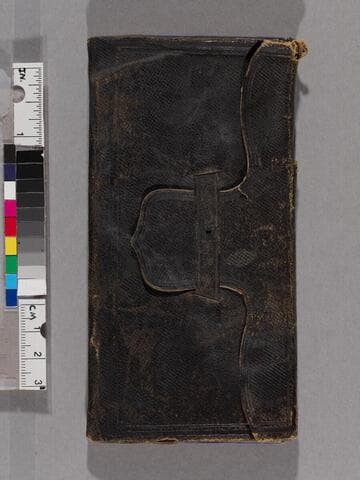
Manuscripts
Pocket diary in pencil and pen. Describes the brief period of four months while Thomas was in the 4th Iowa Cavalry Regiment, Company E, prior to his falling ill and dying in May of 1864. Includes his comments on falling sick and fighting the "flux."
mssHM 76855
Image not available
Manuscripts
Letters that Marckres wrote home between April 24, 1861 and July 21, 1864. The first letter (1861, Apr. 21) describes the "great excitement" that gripped Peacham, including a rousing town hall called up by " 5 or 6 of we boys" to discuss raising of a company and the enthusiastic response it received and raising of a "Liberty pole" on the town square. The seven letters written in the summer of 1864 describe the fighting in Virginia, including the battles of Cold Harbor, Wilson's raid on South Side & Danville Railroad, and the siege of Petersburg, discuss the commanding officers, including Ulysses S. Grant and James Harrison Wilson, and provide updates on the war news.
mssHM 30504 (1-9)