Opening Hours
Daily: 10 A.M.–5 P.M.
Closed on Tuesdays
1151 Oxford Road
San Marino, CA 91108
Daily: 10 A.M.–5 P.M.
Closed on Tuesdays
1151 Oxford Road
San Marino, CA 91108

Image not available
Manuscripts
Collection primarily consists of the correspondence of Lemuel Shattuck, mostly letters addressed to him. The letters discuss Shattuck's work on his history of Concord, Massachusetts; his tenure as the editor of the Yeoman's Gazette; various publishing projects; the affairs of the Middlesex County and Cambridge, Massachusetts Lyceums; the 6th U.S. Census in 1840; and his work on statistics, public health, history, and genealogy. The largest group of 21 letters, dating from 1826 to 1849, is Shattuck's correspondence with Edward Everett. Everett's letters cover political affairs, including his 1826 speech on slavery and his position on the Antimasonic and National Republican parties in the 1832 elections. Other correspondents include James Buchanan (1791-1868); Ralph Waldo Emerson, John Farmer (1789-1838), George Farrar (1778-1858), Richard Fletcher (1788-1869), John Hoskins Griscom (1809-1874); Eben Norton Horsford (1818-1893), Horace Mann (1706-1859), James Gates Percival (1795-1856); Ezra Ripley (1751-1841), Jared Sparks (1789-1866), James Stewart (1799-1864), James Walker (1794-1874), Francis Wayland (1796-1865), Daniel Webster (1782-1852), Noah Webster (1758-1843), and Robert Charles Winthrop (1809-1854). Also present is a group of 16 manuscripts dating from 1654 to 1799 collected by Shattuck in preparation for his history of Concord, Massachusetts, including documents dealing with Simon Willard's 1654 expedition against the Narragansett Indians, King Phillip's War from 1675 to 1676, and the dispute between the town of Concord and Robert Blood, 1685. Collection includes James Buchanan, Department of State, autograph letter signed to Lemuel Shattuck, Boston, 1845 November 20 (HM 8375).
mssShattuck
Image not available
Manuscripts
A collection of approximately 483 items from 1862 to 1919, which contains personal papers, Civil War diaries, notebooks, correspondence, documents, medals, and ephemera. The three pocket diaries cover the Atlanta Campaign (May to September 1864), Sherman's March to the Sea, and initial stages of the campaign in the Carolinas. Brief daily entries record military actions, camp life, and contain lists of casualties and procurement records. The notebooks contain brief records of expenses for 1864 to 1865. The letters addressed to Lemuel H. Hazzard from his friends and family in Iowa and other regiments discuss family matters and various aspects of the Civil War, including hospitals and the home front. Included is a letter from his brother William Hazzard who served with the 38th Regiment of Indiana Infantry. Lemuel H. Hazzard's letters to his wife Frances Hazzard depict social life in Salem, Missouri, 1872 to 1873. The collection also contains letters from William Hazzard, son of Lemuel and Frances, member of 2nd Regiment of Missouri Infantry of United States Veterans who, from 1899 to 1900, held a position at the Department of Posts in Havana, Cuba; also letters from son Lloyd Hazzard, Sergeant of Co. B of 115 Regiment of Engineers of American Expeditionary Corps stationed in France in 1919. The documents include Hazzard's parole issued by the Army of Kentucky on September 1, 1862, also documents relating to Hazzard's employment by the Railway Postal Service in Kansas City, Missouri, his business activities, and insurance. The Co. I of the 12th Regiment of Indiana Infantry documents consist of muster rolls, descriptive rolls, furloughs, quarterly returns of deceased soldiers; communications from various hospitals regarding patients from the company, ordnance and requisition records, and special orders.
mssHazzard
Image not available
Manuscripts
A collection of approximately 483 items from 1862 to 1919, which contains personal papers, Civil War diaries, notebooks, correspondence, documents, medals, and ephemera. The three pocket diaries cover the Atlanta Campaign (May to September 1864), Sherman's March to the Sea, and initial stages of the campaign in the Carolinas. Brief daily entries record military actions, camp life, and contain lists of casualties and procurement records. The notebooks contain brief records of expenses for 1864 to 1865. The letters addressed to Lemuel H. Hazzard from his friends and family in Iowa and other regiments discuss family matters and various aspects of the Civil War, including hospitals and the home front. Included is a letter from his brother William Hazzard who served with the 38th Regiment of Indiana Infantry. Lemuel H. Hazzard's letters to his wife Frances Hazzard depict social life in Salem, Missouri, 1872 to 1873. The collection also contains letters from William Hazzard, son of Lemuel and Frances, member of 2nd Regiment of Missouri Infantry of United States Veterans who, from 1899 to 1900, held a position at the Department of Posts in Havana, Cuba; also letters from son Lloyd Hazzard, Sergeant of Co. B of 115 Regiment of Engineers of American Expeditionary Corps stationed in France in 1919. The documents include Hazzard's parole issued by the Army of Kentucky on September 1, 1862, also documents relating to Hazzard's employment by the Railway Postal Service in Kansas City, Missouri, his business activities, and insurance. The Co. I of the 12th Regiment of Indiana Infantry documents consist of muster rolls, descriptive rolls, furloughs, quarterly returns of deceased soldiers; communications from various hospitals regarding patients from the company, ordnance and requisition records, and special orders.
mssHazzard
![Life sketch of Lemuel Hardison Redd [microform]: after 1891](/_next/image?url=https%3A%2F%2Frail.huntington.org%2FIIIF3%2FImage%2F22APN4DHC14Y%2Ffull%2F%5E360%2C%2F0%2Fdefault.jpg&w=750&q=75)
Manuscripts
Microfilm of Lemuel Hardison Redd's brief autobiography, recorded at White Pine, Nevada, sometime after 1891. Redd briefly describes his early life and journey to Utah, but mainly focuses on his life in Utah after 1850. He describes settling in Spanish Fork, where his father helped build the first saw mill (it was destroyed during the Walker War in 1853), and briefly describes his experiences during the Walker War, his marriage, his mission to Nevada, his participation in the Utah War, and helping colonize New Harmony as part of the Dixie Mission in 1862. Redd also mentions buying the John D. Lee homestead in 1870, helping establish the United Order at Harmony, and moving to San Juan County and later Mexico to avoid polygamy charges. The account also describes in some detail the various activities of Redd's children.
MSS MFilm 00379
Visual Materials
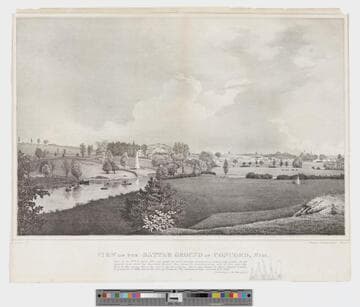
Image of a landscape view of the battlefield grounds and American Revolutionary War monument at Concord, Massachusetts; town of Concord in background at right.
priJLC_MIL_004411
Image not available
Manuscripts
This manuscript is a receipt to Eugene Lemuel Sullivan for taxes paid on property owned in the city of San Francisco. Printed form, filled in and signed by hand.
mssHM 19344