Rare Books
Loss of the ship Albion, and Bruce's address
Image not available
Daily: 10 A.M.–5 P.M.
Closed on Tuesdays
1151 Oxford Road
San Marino, CA 91108

Image not available
Rare Books
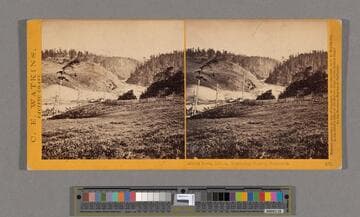
Watkins no. 153. Image size: 15 1/2 x 20 1/8 inches. Note: Naef no. 419. View of Albion River and lumber mill.
379010
Image not available
Visual Materials
This collection contains 269 stereographs by photographer Carleton E. Watkins, dating from the 1860s to about the 1880s, that chiefly depict buildings, points of interest, and locales in Northern and Southern California. The collection includes 1 stereograph from the Central Pacific Railroad series; 5 stereographs from Watkins' Pacific Railroad Series; 110 stereographs from Watkins' Pacific Coast series; and 150 stereographs from Watkins' New Series. The Watkins' Pacific Coast Series, created between 1861 and 1874, primarily depict locales in Northern California with many images of buildings in San Francisco, views of Yosemite and Mariposa County, Missions, and some mining operations including photographs of the North Bloomfield Gravel Mining Company in Nevada County, California. The Watkins' New Series stereographs, created between 1874 and 1890, consist of images of both Southern California and Northern California, in cities including San Francisco, Pasadena, San Marino, Sierra Madre, and San Gabriel. Among the Southern California residences and properties depicted include the Sunny Slope Ranch of L.J. Rose in San Gabriel, Willow Dale owned by N.C. Carter, and Lake Vineyard owned by B.D. Wilson. Some of the stereographs in Watkins' Pacific Coast Series include titles in the margins in Watkins' own hand (see Nos. 1033, 1135, 1146, 1153, and 1721).
photST Watkins
Image not available
Visual Materials
The Citrus label collection contains more than 1,500 lithographed labels related to the California citrus industry in the United States from 1880 to 1960, with the bulk of the collection dating from 1890 to 1940. The vast majority of the collection consists of lithographed labels produced for Californian growers, packers, and distributors to identify brand names and packing locations on wooden shipping crates of oranges, lemons and grapefruits. Many of the labels were printed by Los Angeles and San Francisco lithographers. The collection includes a range of lithography techniques from crayon drawing and hand stippling to the use of Ben Day screen patterns and half-tone lithography. The collection also includes more than 100 examples with "bronzing," a printing technique where varnish is printed on the label, followed by a dusting of fine bronze powder. A significant number of labels are stamped on verso with a received date by the Fruit Growers Supply Company, and some include signatures of approval or notations about printing corrections. The collection provides a broad view of the development of citrus fruit advertising over time, and also touches upon topics of commerce, manufacturing, travel and tourism, and promotion of the western United States. In the earliest examples, themes include naturalistic designs of flowers, animals, women, historical subjects, and scenic landscapes. Brand names, simple designs, block letters, and geometric patterns dominate in later examples. Many of the labels depict orange groves, scenic views, or flowers, though the collection also includes a wide variety of imagery beyond these themes including Native Americans, transportation, children, and portraits of famous or fictional people.
ephCL A_14